

Tanya Louie talks about the importance of language recordings and how having a bit of fun can make learning a language that much easier
(Janeek) Tanya Louie of Iskut First Nation is a person still very much in touch with her inner child. She began teaching the Tāłtān language to children of all ages alongside her puppet, Tsūtsū, with the opening of her community’s language nest back in 2018. She has been using different forms of recordings to support language revitalization in her community from videos for kids to digitizing old recordings from fluent speakers.
Listening and Laughing while learning with Tsūtsū
When the language nest closed due to COVID-19, Tanya began posting videos of Tsūtsū speaking Tāłtān on Facebook so children in her community could continue learning. Tsūtsū is a wise and gentle great grandmother who has a way about her that makes any audience sit up and listen to what she has to say.
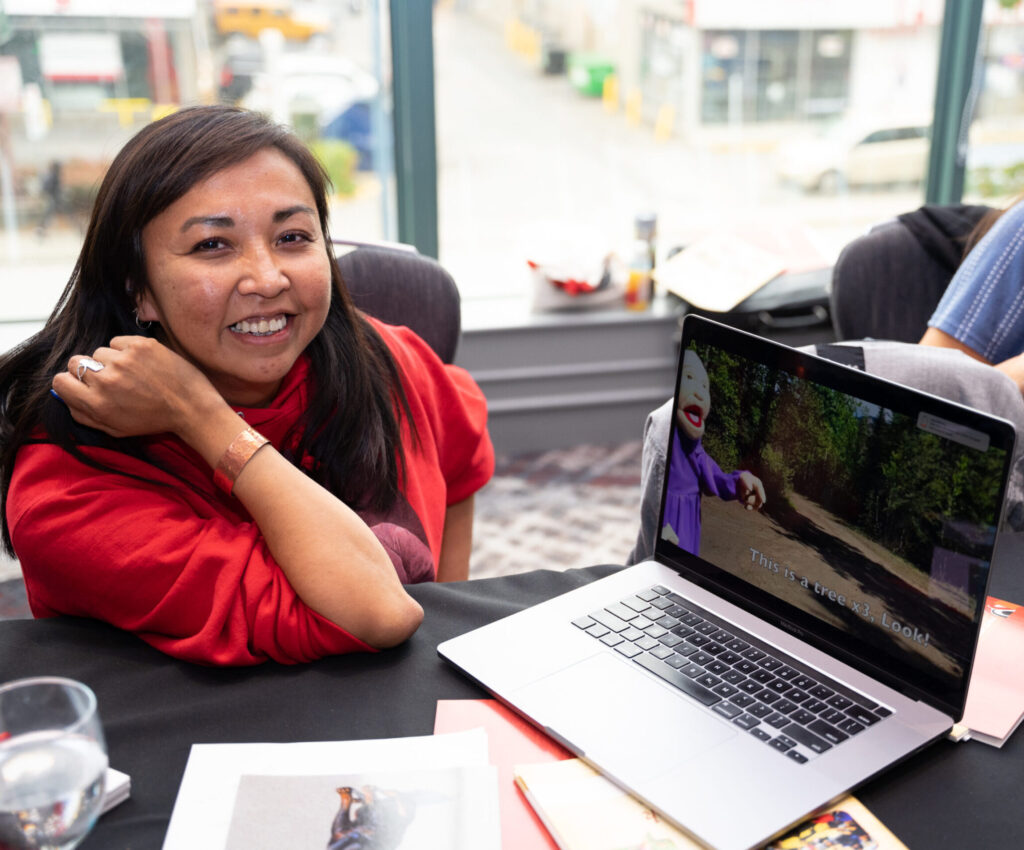
“Whenever I brought my puppet into our language nest and spoke the language, all the kids would immediately listen. There was this one student, she was a bit older, maybe 15 years old. She wore sunglasses through the whole class. We kept asking her to remove her sunglasses, but she wouldn’t. But once Tsūtsū asked her, she took them right off,” Tanya laughs. “I think that’s the power of puppets. I’m really inspired by Sesame Street. I grew up with it and I loved it. Learning really takes place, I think, when you’re having fun with it.”
Tsūtsū is not only a wise Elder but she’s also funny. It’s hard not to giggle a little when you watch her teach different words and phrases in Tāłtān.
“Having Tsūtsū has been great because she has let me laugh at myself,” Tanya says. “You have to learn to laugh at yourself when learning the language. Everybody makes mistakes. I shouldn’t say mistakes – really they are lessons. Everything in life is a lesson. Once you learn to laugh at yourself and not take yourself too seriously, I think that’s when the world opens up to you. It is when you take yourself too seriously that you close yourself up really small. I want more people to get interested in the language and not be scared of it. Right now, there’s a lot of community members, not just our community members, but a lot of Indigenous people are still scared to speak the language.”
Documenting and learning from the past
In addition to making recordings of her own language teachings, Tanya has recently begun learning how to digitize old recordings of her language so they can be protected and shared for future generations.
At a recent digitization workshop in September, offered by FPCC’s Language Vitality Program, Tanya, along with her sister, Patricia, brought a cassette recording of their late grandfather singing in Tāłtān. At the workshop, digitization kits were distributed to all in attendance. The equipment kits are mobile workstations that convert the contents of audio cassette tapes from their analogue state to a digital format, which can be saved as a .wav or .mp3 file (digital audio file).
The kits are carefully organized by FPCC and distributed to recipients of the digitization funding option of the Language Vitality Program. Recipients assemble the kits with FPCC staff and receive training on how to use them, as well as how to inventory, archive and mobilize their analogue source materials and digitized files.
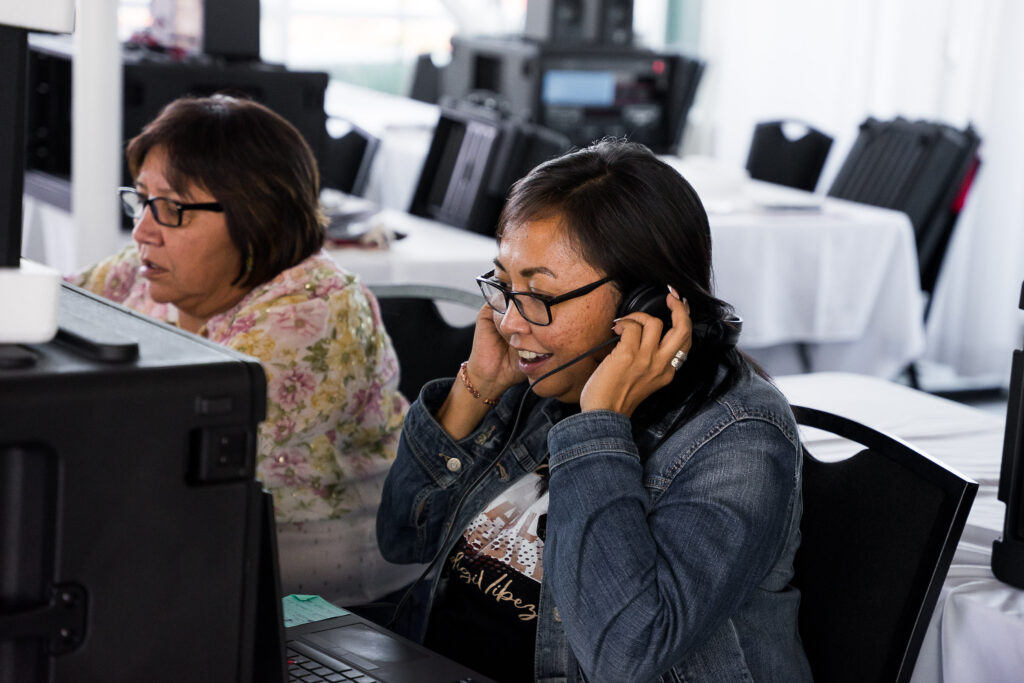
Getting the chance to digitize a song by her grandfather held incredible meaning for Tanya:
“I didn’t get to meet either of my grandfathers, and now we’re here to digitize one of them singing in the language,” says Tanya. “I’m really excited to hear my Grandpa’s voice because I grew up not having a grandpa, yet really longing for one. I can’t wait to hear him, just to know that he’s out there. Our Elders that have passed on are just like the stars – they guide us.”
Tanya notes that there has been a lot of interest in getting more recordings digitized in her community.
“My sister and I put it out on our social media that we were going to be digitizing. We asked if people had any cassettes, and the response we got from the community was incredible,” she says. “There are a lot of people who have passed on that people still have recordings of, and we just want to digitize them and bring them back. It’s such a great way to keep their memories alive.”
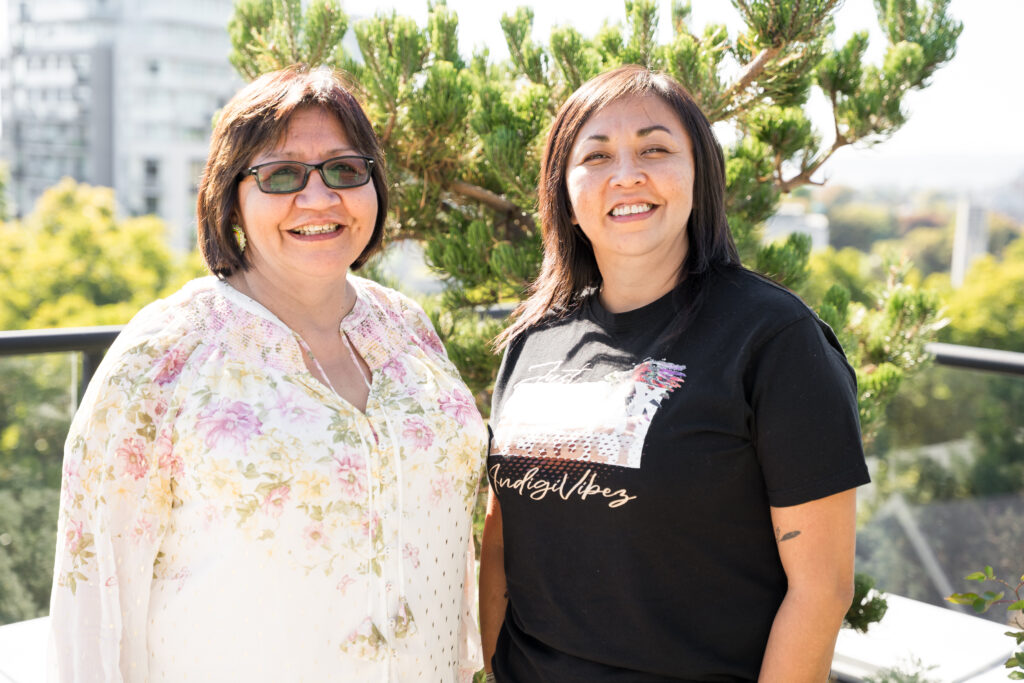
When asked about her experience working in language revitalization and how FPCC has supported that journey, Tanya had this to say:
“Going to a workshop like this where you get to meet other communities going through the same struggles or having the same achievements, it’s really heartwarming,” she says. “Knowing that you’re not the only one out there. Saving a language is hard work – mentally, physically, but it’s really rewarding. It’s especially rewarding when you hear kids using the language.”
There are many ways to record or document a language to provide access to learners of all ages. Creating engaging videos like Grandma Tsūtsū’s or digitizing recordings of language speakers from past generations are only two methods. Recorded language materials are just one of many tools that help foster language fluency. FPCC continues to support communities with program planning and technology developments to nurture First Nations language revitalization in B.C.
For more information about Language Technology funding at FPCC, visit our Language Vitality Program page.
FirstVoices.com is a free, online environment that connects the knowledge carried in our languages to modern digital technology. This community-led platform supports collaboration with Elders. Language teams can upload dictionaries, alphabets, songs, stories, words and phrases as well as audio and video to their community sites. FirstVoices is a joint initiative of the First Peoples’ Cultural Council (FPCC) and the First Peoples’ Cultural Foundation.
More inspiring Language Program stories
- Saying YES to Learning the Language
- Living the Language
- Practising Art, Practising Language
- Strengthening Connections Through Language Learning
Share your story!
Do you have a story about the work your community is doing to revitalize First Nations languages, heritage and arts in B.C.? We want to hear from you! Please send your story to info@fpcc.ca and check back as we post more stories about the good work being done across the province.
We are here to provide support
If you have questions or need any assistance completing your application or using the grant portal, please contact the program staff listed at the bottom of each program page.
Connect with us
To receive FPCC news and funding announcements, please sign up for our email list here.
To view all current FPCC funding opportunities, please visit our Grants page.
Follow FPCC on social media for updates: Facebook | Twitter (X)| LinkedIn | Bluesky | YouTube