

Esk’etemc community members are bridging the traditional knowledge gap with the support of an FPCC Cultural Practices Grant
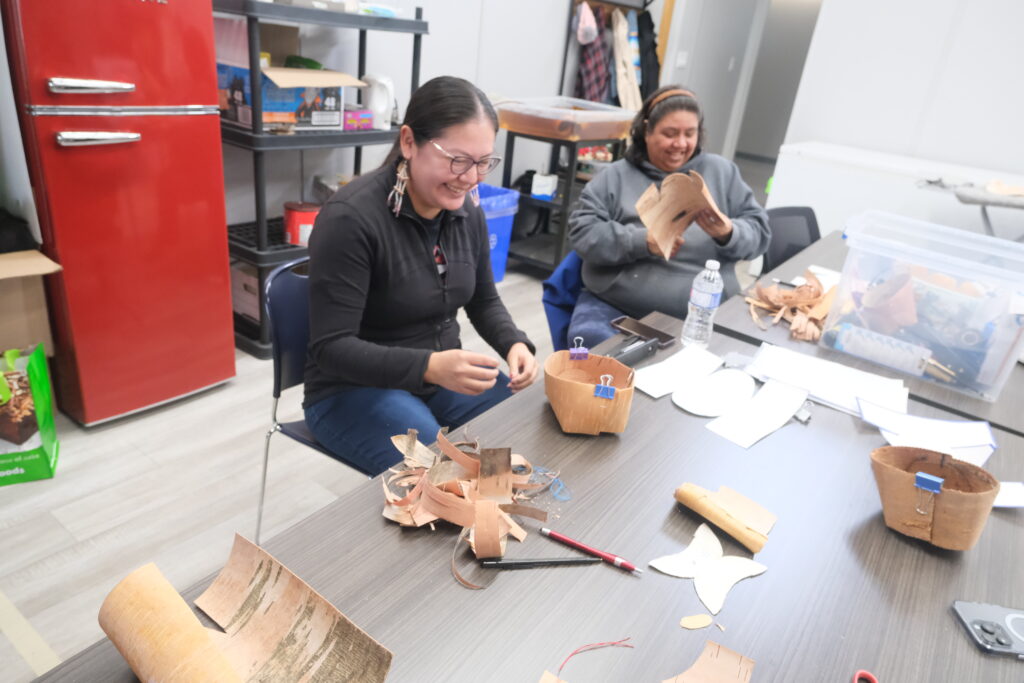
A recent project in Esk’etemc, Alkali Lake, B.C., provided both youth and adults with valuable opportunities to engage and connect with their cultural heritage. Workshop participants learned how to make culturally significant items such as regalia and birchbark baskets.
Supported by FPCC’s Cultural Practices Grant (CPG), the goal of the community-based project was to foster a deeper understanding of Esk’etemc cultural practices and ensure those practices continue to be honoured and preserved for future generations.
Teaching Tradition
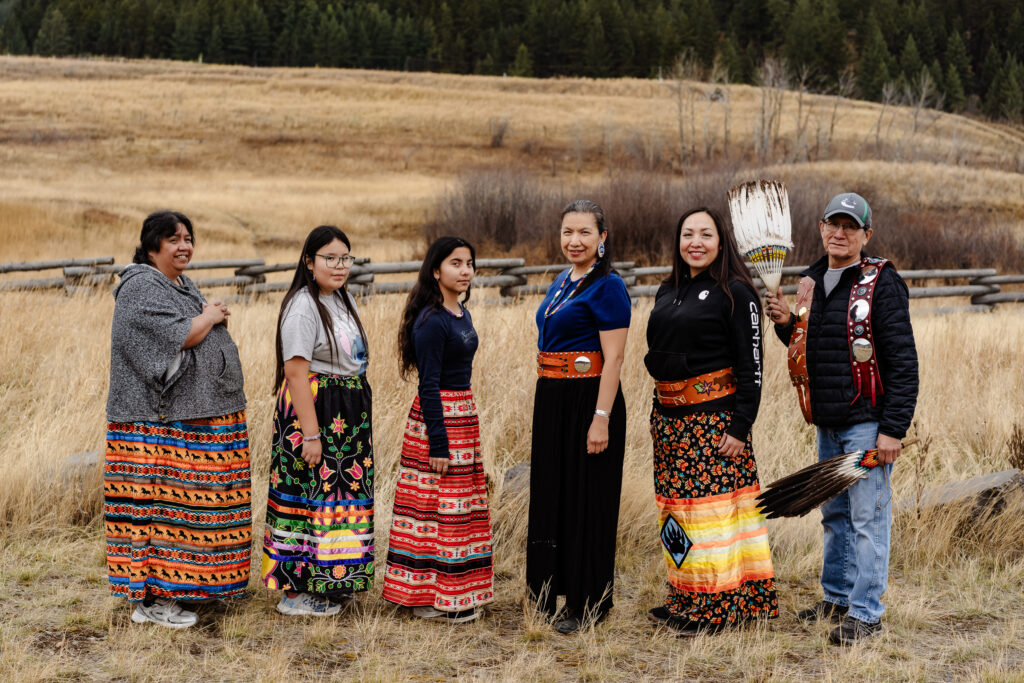
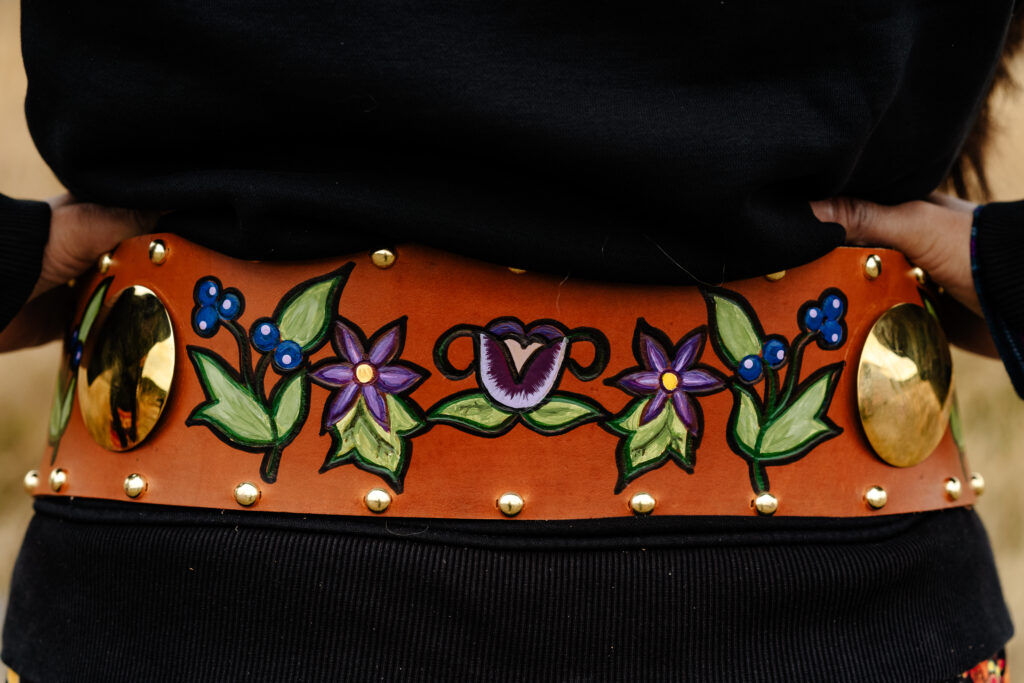
This project was led by Valarie Johnson, Curriculum Specialist for Esk’etemc’s Community Education Language and Culture Department. The project supported Esk’etemc youth and adults in learning how to make jingle dresses, ribbon shirts and skirts, and belts used in dance, ceremonies and cultural practices, as well as birchbark baskets. During every lesson, community Knowledge Keepers advised the students on the proper protocol for the work.
“All participants were taught about the sacredness of the regalia,” Valarie says. “We discussed the importance of the energy that we bring and how important it is to be praying while we’re creating. We remind the youth that the purpose of dance is prayer because we’re blessing the tmícw – the land – and we’re blessing the animals, the insects and the sky. We’re also blessing ourselves and the people in the community. So, the work that we do while we’re creating our regalia has to be very intentional.”

The project honoured Indigenous knowledge transfer and the importance of learning from Elders through mentorship. The teachers included educational role model and expert seamster Dallas George Jr., who was brought in to teach regalia-making. Dallas has been sewing regalia for many years and learned the practice from Elder Doris Johnson. She taught regalia-making for over 30 years up until her recent retirement. Esk’etemc Language and Culture Programme Mentor, Jacinta Sampson, helped with activities alongside Valarie, and Elder Dr. Cecelia DeRose was brought in to support birchbark basket-making.
Strengthening Relationships
Valarie explains that making regalia for activities like dancing, ceremonies and community events, supports cultural sustainability because it teaches the laws of the land and supports building healthy relationships. It also connects participants to their spiritual side, something nearly erased by the residential school system:
“Dancing strengthens relationships with the land and with the community, and it also helps you build a relationship with yourself and your identity,” Valarie says. “When we did ribbon shirts and ribbon skirts, I was able to see the joy in the youth’s eyes after they had completed it. They wore it right away and, you know, they were just so proud of themselves. They were also incredibly proud when they went to celebrate the Declaration Title of Rights Day, which is on May 8th every year. They were all there wearing the ribbon shirts and ribbon skirts that they had made with their own hands.”

In addition to teaching protocol, the Elders provided the students with knowledge on the history of each activity. This gave students the opportunity to learn the story of how the Northern Secwepemc lived prior to colonization.
Throughout each activity, Valarie documented the process to develop learning materials for future students. She worked with the late Julianna Johnson and Irvin Johnson to translate her documentation into Secwepemctsín so that language-based, localized learning kits can be developed and used for generations to come.
Nurturing Culture to Protect Its Future
Working on the project has further shown Valarie the vulnerable state her Nation is in when it comes to the vitality of cultural revitalization. The community has recently lost many Elders who have been crucial to the transfer of skills and knowledge:
“Three Elders that were mentors of mine, I know would be really proud of the work that we’re doing because, as I applied for these grants, I went to them, and I asked them what they thought was a priority in our community. They told me it was dancing and singing and drumming. Everything cultural and related to language was really important to them. So, I know they’d be really proud of the work that’s being done here.”
Valarie expresses gratitude at being able to do this project, but feels much more work needs to be done, with not a lot of time to do it.
“We need all hands on deck and we need teachers. We need community leaders and youth and all age groups, adults, everyone to step up and learn as much as they can about our culture so that we can continue to sing, dance or weave a birchbark basket or make a regalia belt. All of these things are really important to continue to learn,” Valarie says. “It’s definitely been an eye-opener for me, and I’m just really grateful and really blessed that we were able to do this project. It’s impacted our community in a great way. It’s been popular. For example, when we had regalia belt making, the capacity was completely full, so now we are planning another one.”
When asked what she would say to anyone considering applying for FPCC’s Cultural Practices Grant, Valarie had this to say:
“Connect with your leadership and figure out what your community prioritizes – what the values and principles of your community are – and then take a look at the grant eligibility criteria and try to align the two so that the application process is smooth. That way, you have the support of the leadership that you need, but also you have the great support of FPCC staff as well.”

Valarie also has this advice:
“Practising your culture is really important, and that means learning about protocol. It means learning about the do’s and the don’ts within the realm of culture, including for your regalia. But it’s important to monitor your wellness too. I feel like all of it’s connected to wellness. So, if you’re monitoring how you’re feeling at the beginning, all the way through to the end… You’re answering the key question of how does language and culture promote health and well-being? I think that we’re showing the great work that we can do in our communities through our own knowledge systems. We often rely on Westernized systems to guide us, but we’ve always had legitimate knowledge within our communities, and sometimes we tend to step outside of that and compare ourselves. Just be proud of yourself and who you are through your culture and through your language.”
We would like to thank Julie Elizabeth Photography from Williams Lake First Nation for capturing some of the participants and final results of this project.
Apply Now for FPCC’s Cultural Practices Grant
Is your B.C. First Nation community working on revitalizing its cultural heritage practices? FPCC Cultural Practices Grant funding is now available for 2026–27!
The Cultural Practices Grant supports B.C. First Nations in planning, carrying out and documenting community-based cultural practices and events that affirm identities, foster a sense of belonging and celebrate the roles, relationships and responsibilities within a community.
The application deadline is December 12, 2025.
Please visit the Cultural Practices Grant page for more information, links to the guidelines and application, and to view the recorded information session.
For any questions, please contact us at: cpg@fpcc.ca.
The Cultural Practices Grant is funded by the First Peoples’ Cultural Foundation through a Canada-British Columbia bilateral agreement as part of the National Action Plan to End Gender-Based Violence. Support for the Cultural Practices Grant furthers the ongoing work under Safe and Supported: B.C.’s Gender-Based Violence Action Plan.
Learn More
FPCC Heritage Program
Heritage Resources
Heritage Toolkit
Current FPCC Funding Opportunities
Share Your Story!
Do you have a story about the work your community is doing to revitalize First Nations languages, arts and heritage n B.C.? We want to hear from you! Please send your story to info@fpcc.ca and check back as we post more stories about the good work being done across the province.
We Are Here to Provide Support
If you have questions or need any assistance completing your application or using the grant portal, please contact the program staff listed at the bottom of each program page.
Connect with Us
To receive FPCC news and funding announcements, please sign up for our email list here.
To view all current FPCC funding opportunities, please visit our Grants page.
Follow FPCC on social media for updates: Facebook | Twitter (X)| LinkedIn | Bluesky | YouTube