

For National Indigenous Peoples Day, we’re featuring heritage projects that celebrate the stories that connect us to the landscape
B.C. First Nations cultures and languages are, and have always been, deeply connected to the land they came from. For National Indigenous Peoples Day, we’re sharing three FPCC-funded projects that use site markers and signage to celebrate stories of the land and raise awareness of First Nations’ ongoing presence and land stewardship. These land markers and signs keep the memories and important history of these places alive. They serve as a visual reminder, to locals and visitors alike, of the rich and vibrant cultural living heritage that connect Indigenous Peoples to the landscape.
Our Stories are Written on the Land in Our Ucwalmícwts Place Names
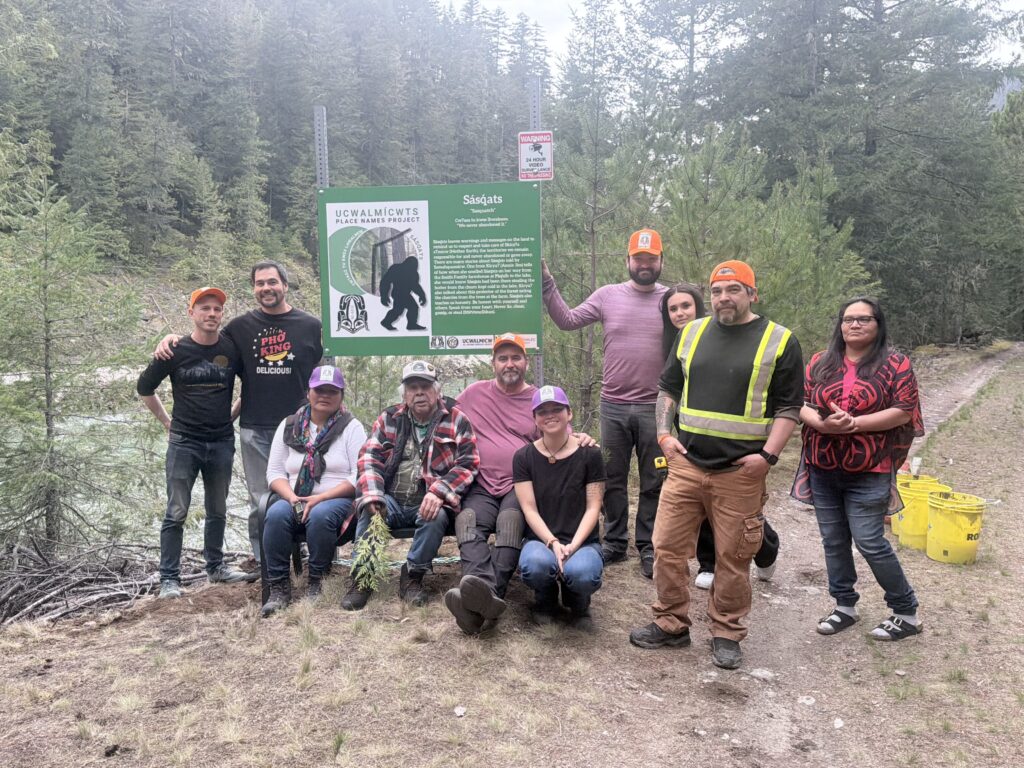
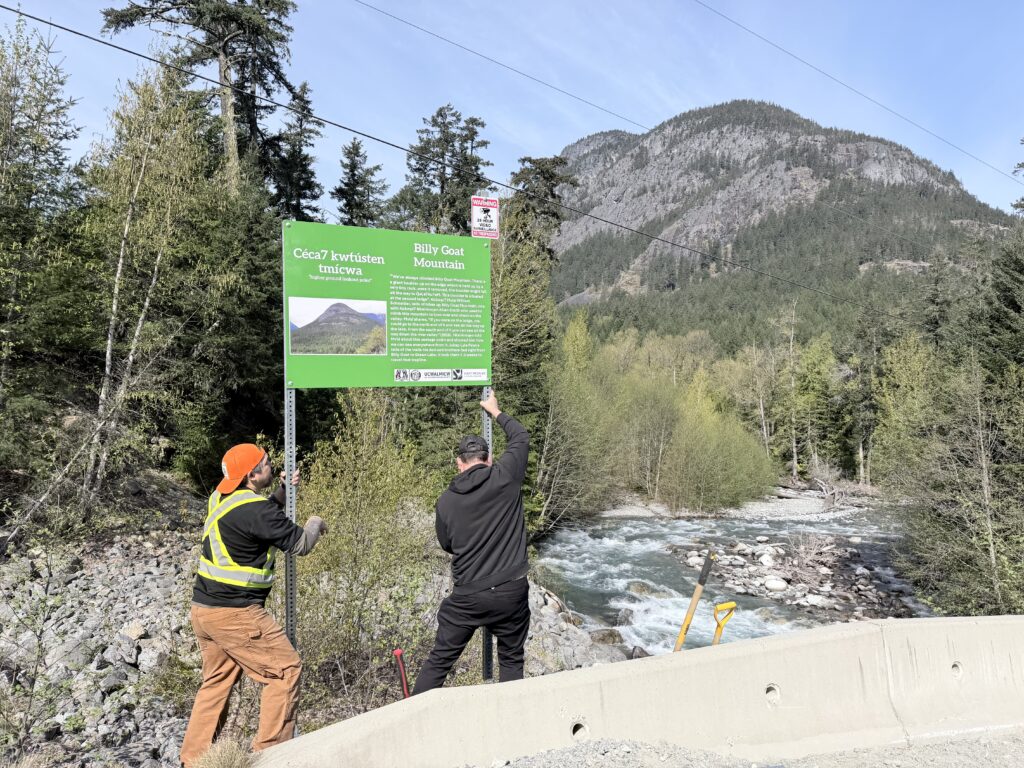
In the spring of 2026, with support from FPCC’s Braided Infrastructure Program (BIP), the Samahquam Nation installed six place name signs on culturally significant sites in their territory otherwise known as Mount Currie, B.C. This project built on a previous 2022–23 BIP Pilot Project that saw the installation of another six place name signs, bringing the total Úcwalmicwts site markers to 12.
There are plans to create and install even more of these signs that tell the stories of how the Samahquamicw have used and cared for these important places in the past and how they continue to do so to the present day. The project, led by the Ucwalmicw All Nations Services Society, brought Elders, leaders and community members together to connect with the land and each other through their shared history and stories.
The project team met with Elder Jukap Lyle Peters several times over the 2025–26 period to gather information for the signs. They recorded videos of Jukap as he visited each site and shared the protocols, practices and Ucwalmícwts words and phrases for each place. All in all, 27 videos were recorded and later shared with the community.
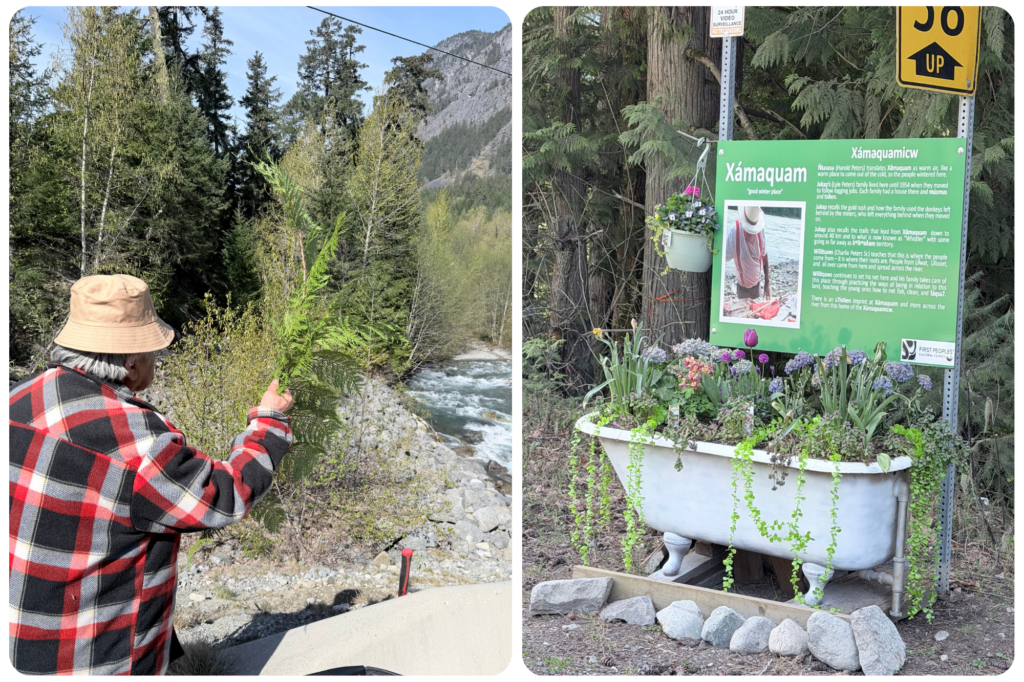
“Though 84 years old, we worked hard to keep up with Jukap as he walked great lengths of territory on each visit, sharing in both the language and in English our histories and place names,” project lead, Kicya7 Joyce Schneider, remembers. “A small sampling of these stories has been posted on the six signs that we, with community volunteer support, installed on the territory on Saturday, April 18, 2026. Jukap was present that day and provided the land awakening ceremony and good words at each of the sign locations, modelling protocols for the next generations.”
Sign installation day saw a significant turnout of community leaders and members who were enthusiastic to volunteer their time and labour to the project.
“We worked together as a community, for the community, and not for pay, as the Elders always remind us was the way back in the day. We knew the work that needed to be done and we showed up with good hearts, did the work and then shared some food, singing, dancing and stories together,” says Kicya7.
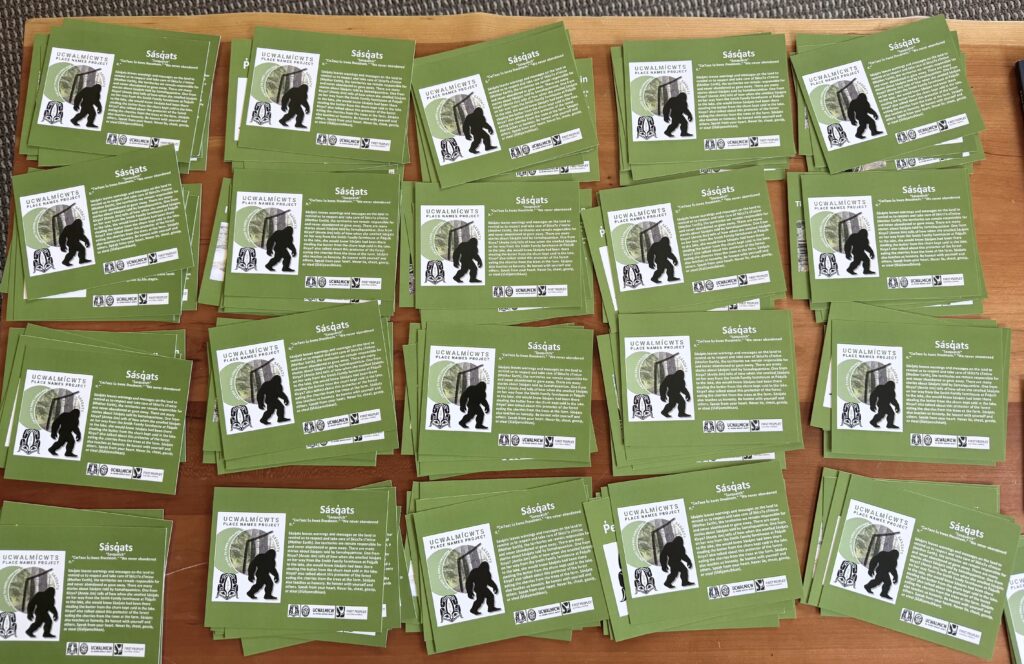
The team also designed and printed 300 postcards (50 for each sign) that contain the same information that is printed on each sign for distribution to the community members.
In addition to creating and installing outdoor site markers, the project organizers also collected teachings and words of wisdom from past interviews with Matriarchs, Elders and land practitioners. These teachings were printed on 3′ x 6′ banners for that were hung in the Samahquam Cultural Centre and the Samahquam Health building so that the speakers’ images and words would be seen, honoured and remembered by visitors to these places.
“The signs, banners, postcards and videos are long-lasting, visible and accessible transmissions of our Samahquamicw knowledge, practices and territory-specific skills and indicate how to be on the land in a good way,” says Kicya7. “This work braids together the stories and ongoing practice of Samahquam cultural ways of being with (and on) the land and has been an excellent source of building a sense of belonging, healing and reconnecting to each other.”
Marking Our Places in Mowachaht-Muchalaht First Nation
In 2024–25, FPCC’s Heritage Infrastructure Program supported the design and installation of 20 site markers on culturally and historically significant locations across the Mowachaht-Muchalaht First Nation (MMFN) territory. MMFN traditional territory spans from the southern portion of Nootka Island to the villages of Tahsis and Gold River, to what is currently Strathcona Provincial Park.
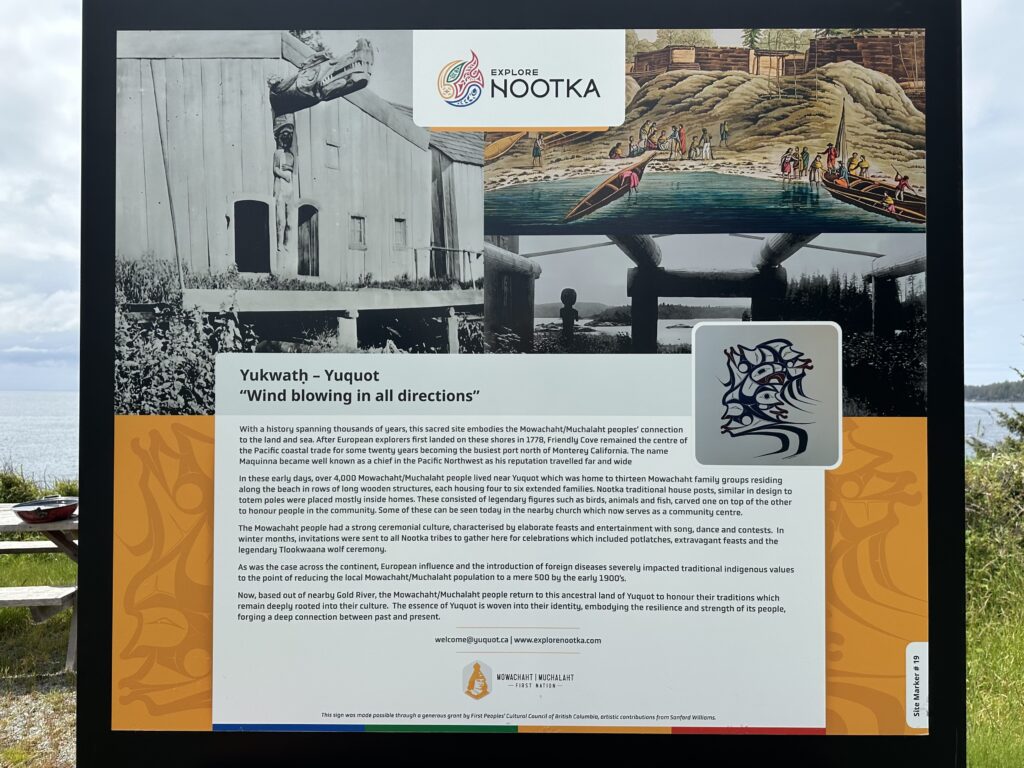
The sites were chosen in consultation with key members of the community. The initial list of potential featured sites was long, at over 100. However, the consulted community members were able to narrow down the list to 20 sites for the initial project, with the goal of covering all chosen sites over the long term as further funding opportunities become available.
The signs provide public education about MMFN’s history and cover such topics as: the location of traditional sites for villages, hunting and harvesting; family and group hierarchy; tribal conflicts; trade routes; sacred ceremonial sites and rituals; impacts of colonialism; cultural changes over the centuries; climate and hunting ground adaptation; and traditional art and land stewardship.
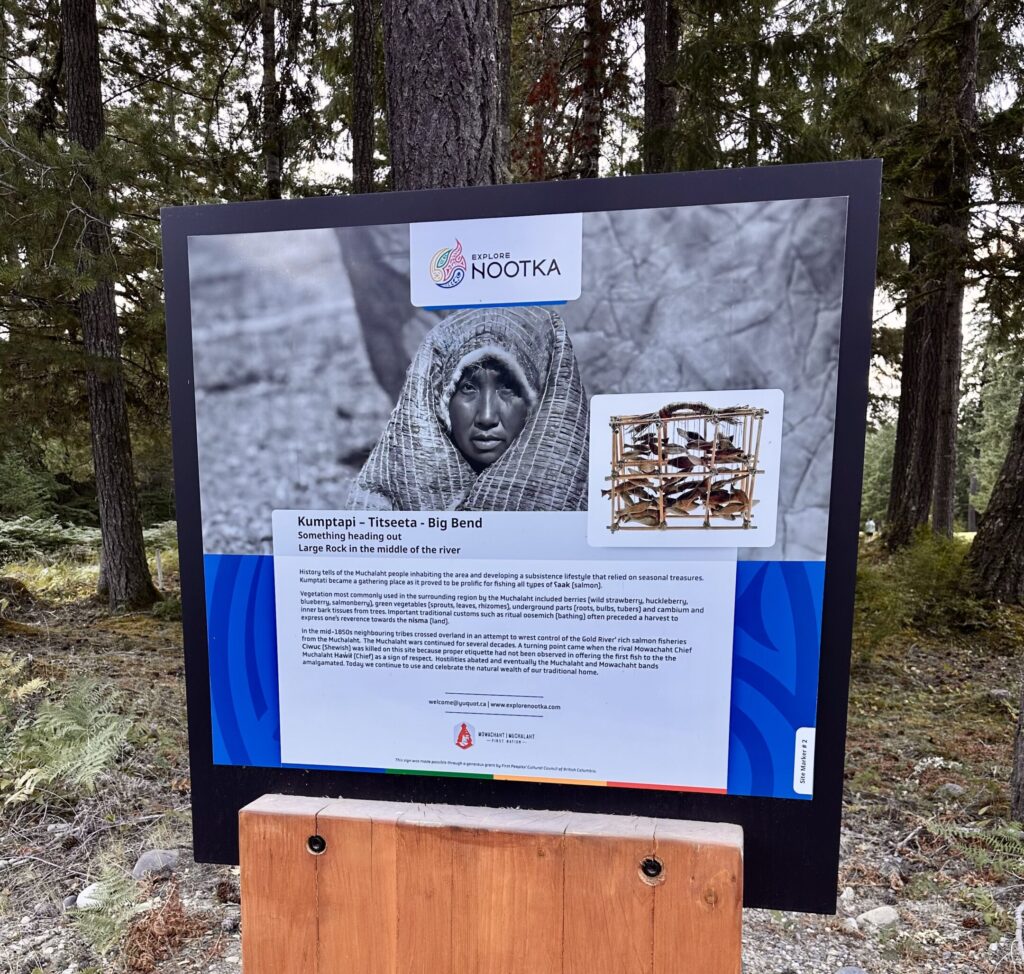
“Our heritage, history and culture are inextricably linked to the territory that our Ancestors occupied, and that our people continue to call home to this day,” said John Gauthier, Yuquot Tourism Officer and lead for the project, in the final report. “For this link to persist, it is paramount that our traditional territory and its historical use are recognized, both by our own people and by the visitors to our land.”
The information on the signs was shared by Elders alongside other members of MMFN and the Land of Maquinna Cultural Society. Imagery and knowledge gathered for the project were also added to the community’s historical archives.
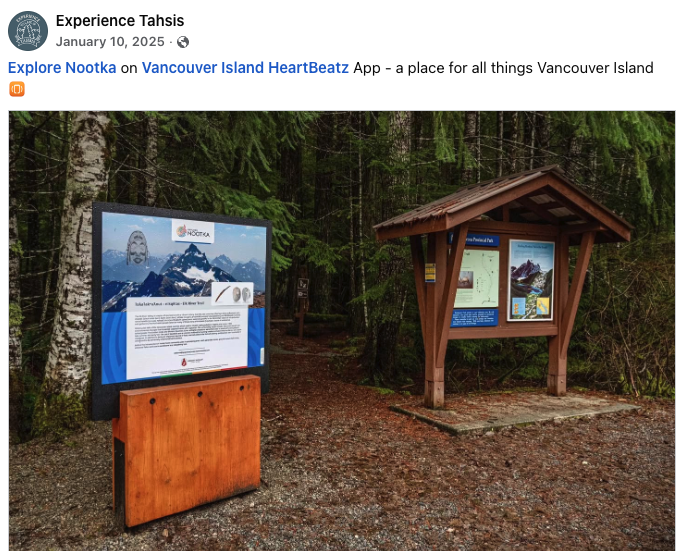
Community feedback on the MMFN site markers has been very positive. The signs have been featured on social media pages and mobile travel apps like Vancouver Island’s HeartBeatz.
When asked about how the project helps safeguard the Nation’s cultural heritage, John said:
“MMFN views our commitment to this site marker project as profound in both stating who we are culturally and historically, as well as in requesting respect in observing our connections to this land. We see the project as a highly impactful way of representing our culture and history throughout the territory.”
Sculpting Pieces of Secwépemc Heritage
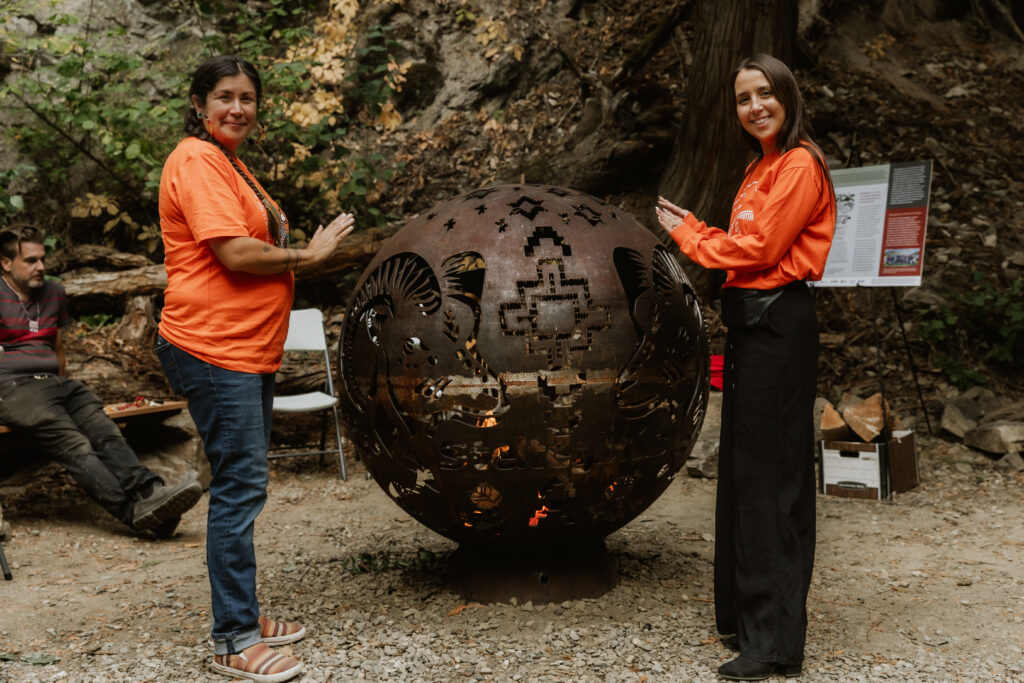
In 2023–24, FPCC’s Heritage Program supported a Secwépemc-led arts project situated in the Shuswap Lakes region of B.C. The Secwépemc Landmarks Project is composed of a series of 16 landmark sculptures carved by Secwépemc and non-Secwépemc contemporary artists.
Each sculpture represents oral histories connected to key locations in the landscape. These stories were gathered from an advisory committee of Elders from Adams Lake Band, Neskonlith Band, Splatsín and Little Shuswap Lake Band.
“We chose 16 sites and then we brought the Secwépemc Elders out to each of those sites so that they could share the place name and personal stories of what they (or their families, or what we) did there as a people and often what we still do in those places. It’s not just fixed in time,” says Shelley Witzky-Spemulecw, Secwépemc Landmarks Project Manager. “At each of the site visits, we captured that information and it became the stories that you see on the storyboards that accompany all of the sculptures.”
Each art piece has an interpretive panel that features Secwépemc stories, language and laws associated with the site. Chief Atahm School conducted the Secwepemctsín review for the interpretative signage and Lucy William and Donna Antoine conducted the Secwepemctsín translations. A QR code on each storyboard can be scanned to hear the proper pronunciation of the place name and the story. Here is the link for the storyboard featured below.
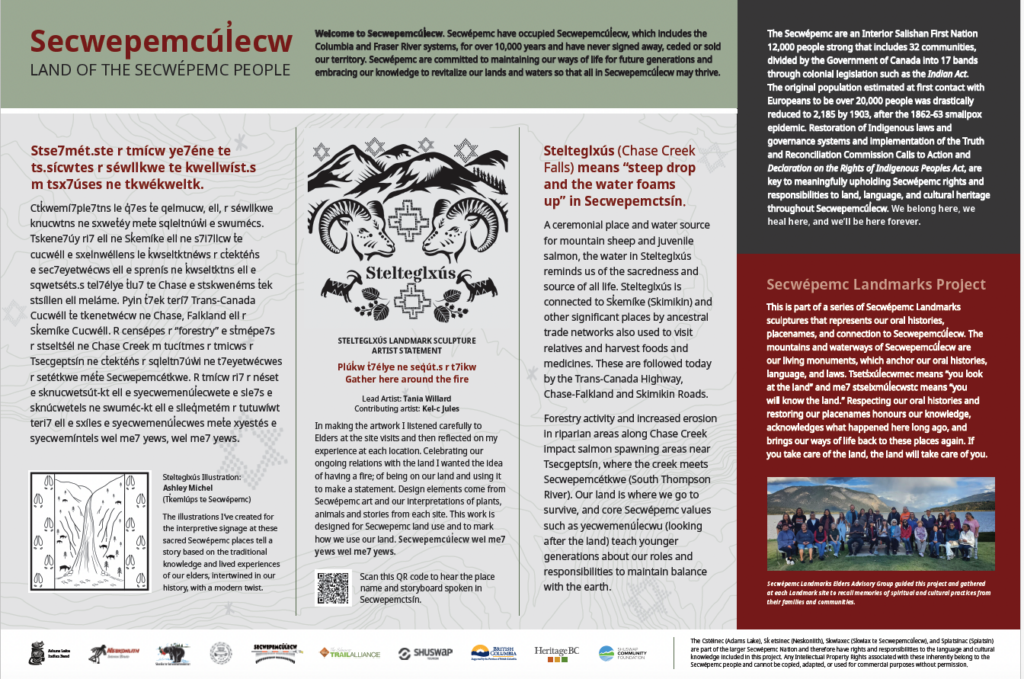
FPCC’s Heritage Infrastructure Program contributed to the larger Secwépemc Landmarks Project by funding site restoration and the ceremonial unveiling of the Stelteglxús Landmark Sculpture (Chase Creek Falls Trail). The funding supported upgrades to the original trail to make it safer and more accessible for Elders and those with varying physical abilities to visit.
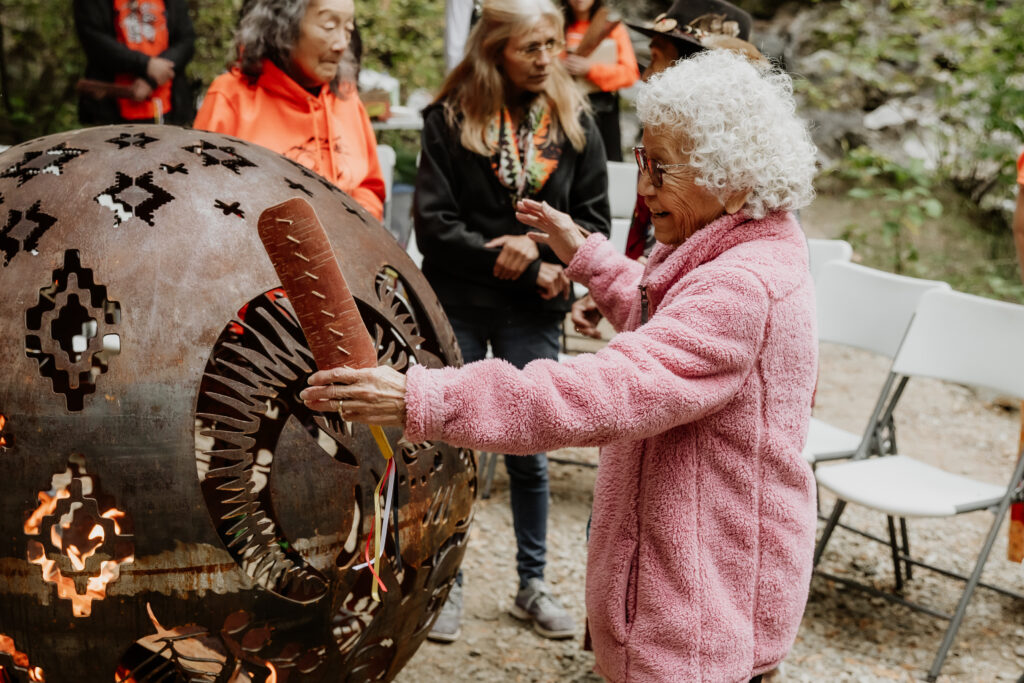
FPCC also funded blessing ceremonies and interpretive panels for eight of the other 16 landmarks. The landmarks have become popular attractions for visitors as well as with local community members.
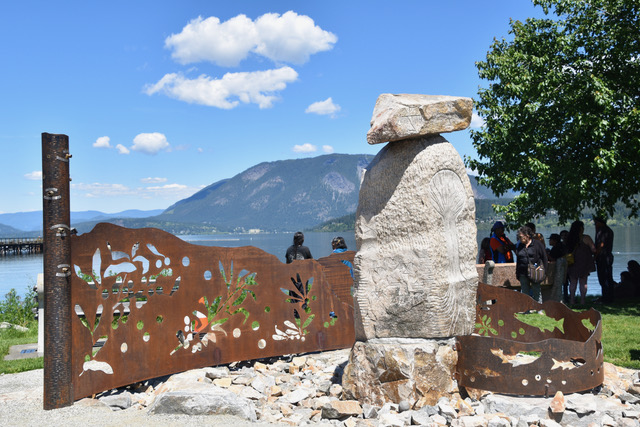
“Probably the most exciting (sculpture) was the Sxwetsméllp Landmark at the Salmon Arm wharf. It was our first one to unveil and is now the most photographed sculpture within the City of Salmon Arm,” says Shelley. “Very exciting to see that a lot of people really are enjoying the artwork and getting to know us. We’re also representing ourselves as Secwepemc people, instead of others telling our story for us.”
Safeguarding Knowledge for the Next Generation
The projects above all provide tangible ways to protect and share B.C. First Nations knowledge and ways of being on the land with current and future generations. They provide powerful, visual representations of their communities’ cultural heritage and incorporate and celebrate the language and stories of Elders and Ancestors. These projects teach others about, and contribute to, our nation’s shared history and ensure Indigenous Peoples’ presence and stewardship continue to be recognized and respected.
About our Heritage Program
FPCC is working to support communities to be the stewards of their heritage through grants, programs and opportunities to bring people together to share knowledge. Learn more about FPCC’s Heritage Program here.
View the Heritage Stewardship Toolkit.
First Peoples’ Map
The First Peoples’ Map can be used to view First Nations language regions, place names and community landmarks as well as Indigenous artists and artworks.
View the map here.
Share Your Story!
Do you have a story about the work your community is doing to revitalize First Nations languages, heritage and arts in B.C.? We want to hear from you! Please send your story to info@fpcc.ca and check back as we post more stories about the good work being done across the province.
We are Here to Provide Support
If you have questions or need any assistance completing your application or using the grant portal, please contact the program staff listed at the bottom of each program page.
Connect with Us
To receive FPCC news and funding announcements, please sign up for our email list here.
To view all current FPCC funding opportunities please visit our Grants page.
Follow FPCC on social media for updates: Facebook | Twitter (X)| LinkedIn | Bluesky | YouTube