

The Tŝilhqot’in National Government has repatriated over 60 Ancestral Belongings from the Museum of Vancouver with support from an FPCC Repatriation Grant
In 2023, FPCC delivered one-time funding to support 16 B.C. First Nations’ repatriation efforts. The impacts of this funding have been immeasurable. For the Tŝilhqot’in National Government (TNG), returning 29 qatŝ’ay (decorative spruce root baskets) meant the return of iconic forms of Tŝilhqot’in artwork and important pieces of the Nation’s history and cultural heritage.
The TNG documented this historic moment in the film Qatŝ’ay: Bringing our Spirits Back Home. Directed by Trevor Mack and Jeremy Williams, the film shares the personal experiences of community members, both young and old, as they are re-united with the baskets of their Ancestors and bring the baskets back home where they belong.
ʔEsggidam Bets’enz: The Ancestors’ Belongings
Repatriating the baskets was a significant undertaking that required a lot of coordination. This included identifying which items were to be returned; building a stronger relationship with the museum; commissioning custom display cases; and organizing travel for Elders, Knowledge Keepers and youth, from Williams Lake to Vancouver, B.C.
Members of the travelling delegation included some of the few people still making baskets today: lineal descendants of the makers of the objects and others with critical knowledge about weaving practices and basket use.
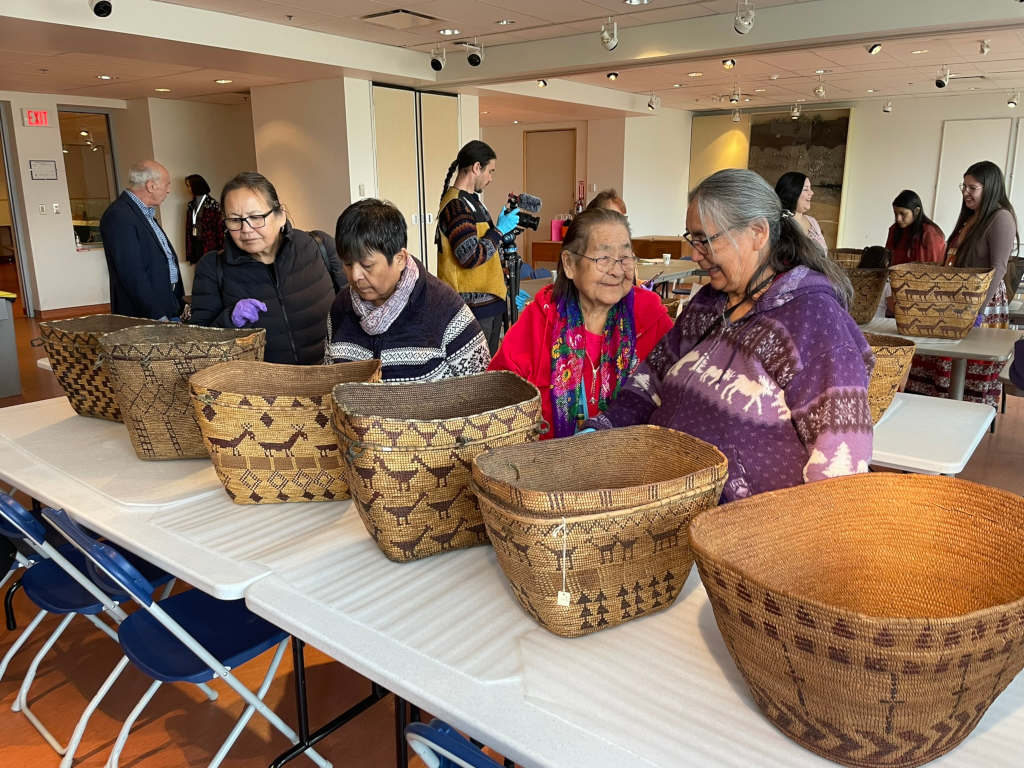
Viewing their Belongings for the first time was a deeply meaningful experience for the delegation.
“We see the reactions of Tŝilhqot’in Elders, or even youth and kids, seeing these objects for the first time, and it’s powerful to watch those moments of connection,” says Shane Doddridge, TNG’s Cultural Heritage Coordinator. “It’s looking back in time and it’s looking forward in time. So, why wouldn’t these Belongings be around people who cherish them and who can appreciate them?”
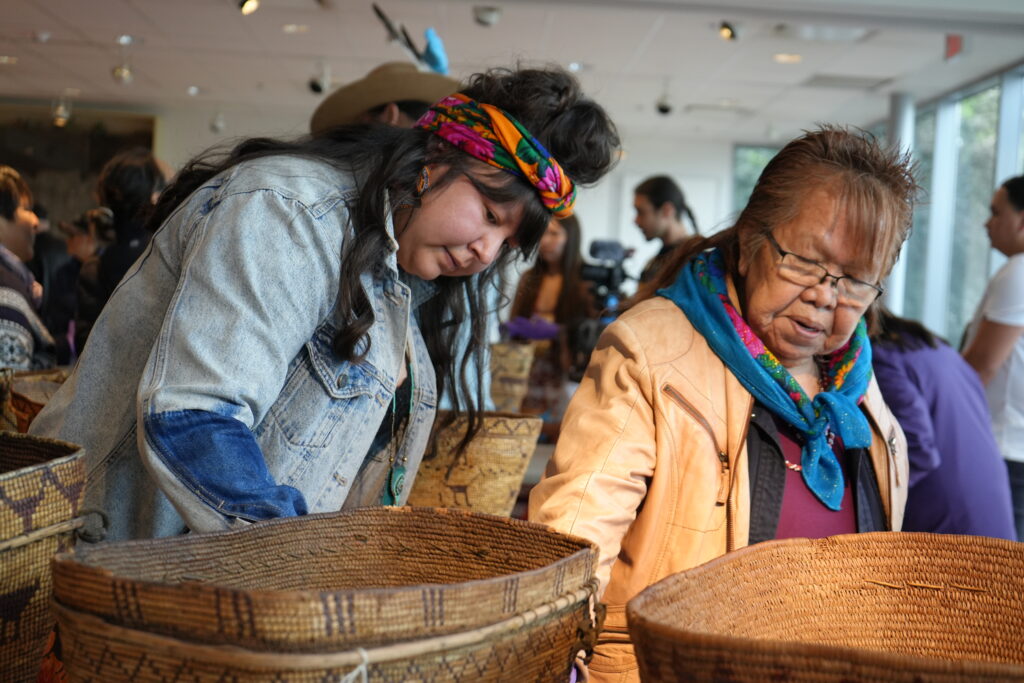
Connecting Past, Present and Future
In advance of the repatriation, project leads spent time interviewing Tŝilhqot’in Knowledge Keepers to better understand and document the protocols for handling Ancestral Belongings as well as the cultural and spiritual impacts of repatriation. They documented knowledge around basket making, including information on the harvesting of raw materials, weaving, how the baskets were used, and basketry in Tŝilhqot’in oral history and legend.
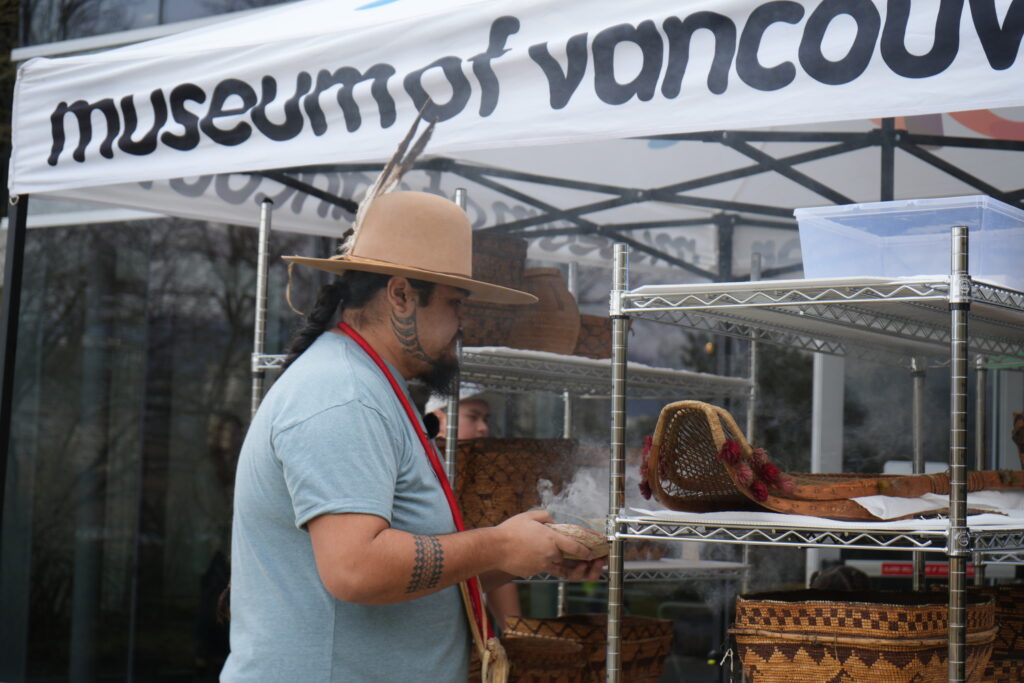
The knowledge gathering helped ensure that the spirits in the baskets and other artifacts would be returned in a good way and in accordance with the Nation’s protocols.
“These vessels hold the spirit, you know, from all these people, our Ancestors from 100 to 200 years ago, that have woven their life into these baskets,” says Dakota Diablo. “Their stories, their dreams, their dadaben (their medicine) into these baskets.”
“They have our Ancestors’ DNA on them. They’re a living thing,” says Joyce Charleyboy. “And I think they would be happy – the artifacts would be happy – being back out on Tŝilhqot’in land.”
Looking Forward
Repatriation work is complicated and takes time, skills and resources to complete. Another goal of the project was to build TNG’s ability to continue repatriation work in the future. To support this, an action plan outlining next steps was created. These steps include researching where Tŝilhqot’in items are located; hiring an archivist to help bring records home; and creating a database of Belongings currently held both within the Nation and in institutions around the world.
The plan also includes the establishment of a museum or cultural centre to house future repatriated Belongings. This will assist in making returned Belongings more accessible for members of the community to view and experience.
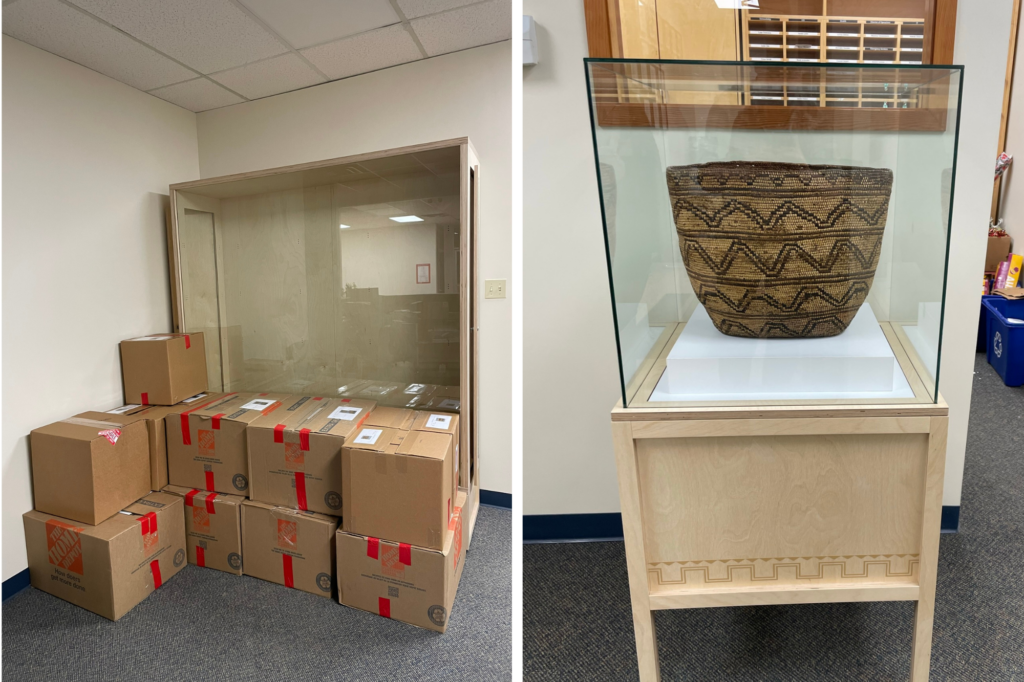
“Receipt of the FPCC Repatriation Grant has been the spark which has ignited a much larger heritage repatriation program,” says Shane. “Without the initial FPCC Grant, we would not have started this incredible process which continues to build momentum and excitement throughout the Nation.”
Qatŝ’ay: Bringing our Spirits Back Home tells the repatriation story of the baskets. The film beautifully illustrates the many ways in which First Nations–led repatriation can support communities in healing from the devastating impacts of colonization.
The film was shared at the Museum of Vancouver as part of the June 2025 collaborative exhibit Nexwenen Nataghelʔilh. The collection celebrated the repatriation of the baskets and demonstrated a tangible example of reconciliation in action. In the news release for the exhibit, Nits’ilʔin (Chief) Otis Guichon, TNG Tribal Chief, shared his thoughts about the repatriation and what it means in the context of the changing relationship between museums and First Nations.
“Repatriation is more than bringing our belongings home—it’s connecting to our
ancestors, lands and culture. Our youth see their ancestors’ belongings and see the strength of our past, as well as our future. This exhibition represents the change needed in museums around the world—working in relationships of respect, sharing the workload, and telling stories together. We are hopeful that this relationship sets an example for other museums around the world.”
Repatriation work is vital for meaningful reconciliation between museums and First Nations in B.C. FPCC continues to advocate for the resources needed to support the revitalization and the community-led stewardship of B.C. First Nations cultural heritage.
Learn More
Qatŝ’ay: Bringing our Spirits Back Home was nominated for the Short Documentary Award at the DOXA Film Festival in Vancouver in 2025. It was also screened at the Red Nation Film Festival in Los Angeles and the NatiVisions Film Festival in Arizona.
Read the news release: Tŝilhqot’in and Museum of Vancouver Work Together in Repatriation
Funding for the Repatriation Grant
FPCC’s 2022–23 Repatriation Grant provided up to $50,000 in funding to 16 B.C. First Nations for the repatriation of Ancestors and cultural treasures. These grants were funded by the First Peoples’ Cultural Foundation through a one-time allocation from the B.C. Ministry of Tourism, Arts, Culture and Sport. FPCC continues to advocate for funding to support repatriation efforts for First Nations in B.C.
FPCC Research on the State of Repatriation in B.C.
In 2025, FPCC published two, groundbreaking reports providing First Nations–led research and analysis of the history and scope of work required to bolster B.C. First Nations repatriation efforts.
From Stealing to Healing: Repatriation and B.C. First Nations shares critical research identifying over 2,500 Ancestors and 100,000 Belongings currently held in 229 colonial institutions worldwide. A timeline presents over 100 years of removal and repatriation in B.C. and shares more recent repatriation experiences from 16 Nations.
Repatriation Cost Analysis: A Framework and Model describes the steps taken to estimate the costs of First Nations-led repatriation, from the beginning planning stages to long-term caretaking after Ancestors and Belongings are repatriated. It is a tool for communities to identify their resources and needs to move forward with their repatriation projects.
View both reports here.
Share Your Story!
Do you have a story about the work your community is doing to revitalize First Nations languages, heritage and arts in B.C.? We want to hear from you! Please send your story to info@fpcc.ca and check back as we post more stories about the good work being done across the province.
We Are Here to Provide Support
If you have questions or need any assistance completing your application or using the grant portal, please contact the program staff listed at the bottom of each program page.
Connect with Us
To receive FPCC news and funding announcements, please sign up for our email list here.
To view all current FPCC funding opportunities, please visit our Grants page.
Follow FPCC on social media for updates: Facebook | Twitter (X)| LinkedIn | Bluesky | YouTube