

For B.C. Heritage Week, we’re highlighting projects and initiatives that celebrate the theme of food as a form of cultural heritage
The goal of B.C. Heritage Week is to inspire connection with local heritage and raise awareness of the many ways it can shape communities, identities and daily lives. The theme for 2026 is Stir the Pot: an open invitation to celebrate food as a form of heritage. This theme invites us to explore food as a vessel of memory, identity and meaning.
In support of Heritage Week, we are sharing some recent FPCC‑funded Heritage projects and initiatives related to food harvesting and food sovereignty. These are inspiring examples of how food connects us to land, culture, identity and community. When we share our food, we share pieces of our heritage.
Revitalizing cultural practices with the next generation
A recent Cultural Practices Grant supported children to learn about the important practice of oolichan harvesting in Gingolx, B.C.
The project began at Nathan Barton Elementary School, with support from community members and other Nisga’a School District staff. It focused on Nisga’a cultural literacy, heritage and traditional harvesting. Students took part in readings, songs, poems and discussions about the Nisga’a language, Hoobiyee (the Nisga’a New Year) and oolichan fish.

Project leads also visited other schools in the Nisga’a Valley, offering cultural workshops related to oolichan and Hoobiyee. Copies of the illustrated children’s book Oolichan Moon were donated to every K-12 school in the Nisga’a School District.
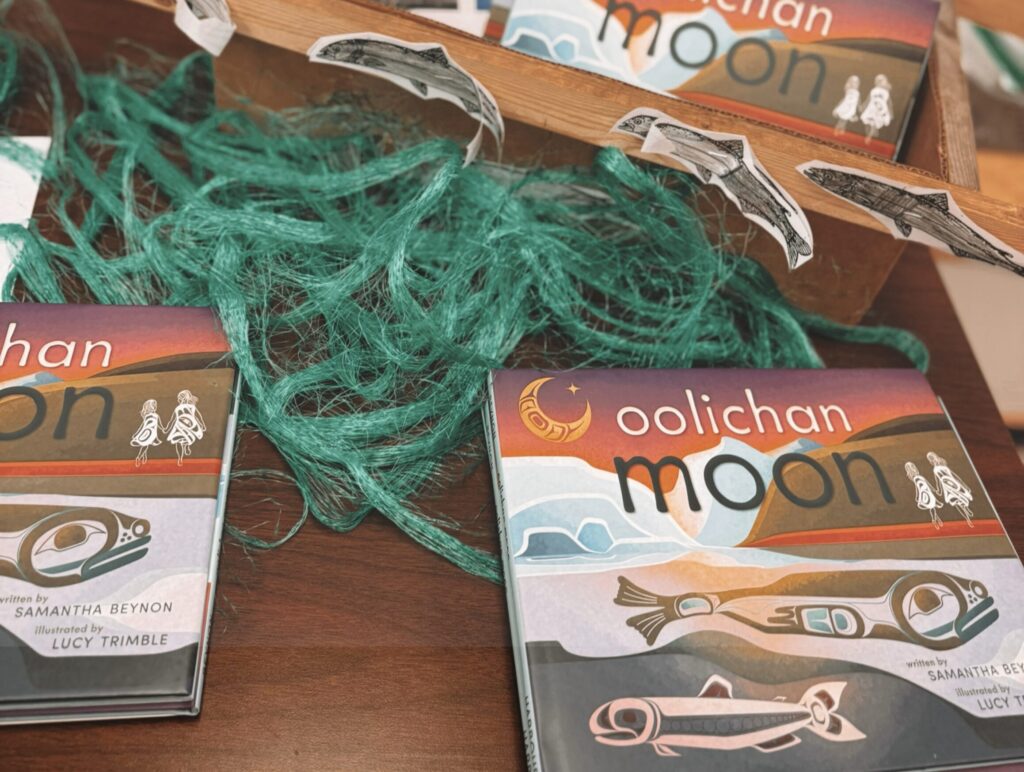
Projects funded by the FPCC Cultural Practices Grant seek to affirm identities, foster a sense of belonging and celebrate the roles, relationships and responsibilities within a community.
“This project helped build cultural pride, strengthened students’ connection to their heritage and brought communities across the Nisga’a Valley closer together.” – Cultural Practices Grant recipient, Gingolx Village Government / Nathan Barton Elementary School.
The project concluded with students proudly displaying their learning.
Promoting Indigenous cultural heritage and well-being through food sovereignty
B.C. First Nations farmers Jacob Beaton and Julian Napoleon shared their experiences supporting Indigenous food sovereignty in a popular panel discussion for FPCC’s recent Online Learning Series.
Jacob Beaton, an award-winning Indigenous business leader and public speaker, leads Tea Creek Farm in Gitxsan territory. He is the Executive Director of the Indigenous Food Sovereignty Association (IFSA), a non-profit society that supports healthy, resilient Indigenous communities grounded in an abundance of culturally appropriate foods. In 2023–24, FPCC supported the IFSA through the Braided Infrastructure Program and a Braided Knowledge Grant.
Funding from these grants supported training and workshops where First Nations community members learned about traditional sustainable agriculture practices, food harvesting, and food preservation. With support from FPCC grants, the IFSA team also planned and constructed a centralized Indigenous food hub in Kitwanga. Tea Creek also offers Indigenous-led Foodlands Employment Apprenticeship Skills Training (I-FEAST).
Julian Napoleon studied Applied Biology in Food & Environment at the University of British Columbia and spent many years studying and practicing small-scale organic agriculture. Julian owns and operates Amisk Farm, a vegetable market farm in his home community of Saulteau First Nations. Amisk Farm offers I-FEAST in partnership with Tea Creek. The farm also partners with IFSA to provide food for free distribution to First Nations communities.
In the panel session, the two farmers shared personal stories and insights from their experiences revitalizing Indigenous agricultural practices.
“There is a lot of beautiful knowledge in our communities, a lot left in our Elders,” Jacob says. “And it is so important to practice Indigenous food sovereignty because it solves so many challenges all in one.”
Jacob and Julian strongly believe that fresh food must be shared and accessible to everyone. Both of their farms provide large amounts of produce to community members at no or low-cost.
“We have so many community members come here everyday,” Julian says, “It evokes that living history in a lot of our Elders…they understand what we’re doing and they remember it and it reignites something in them. So it’s really wonderful to have that and see how well-subscribed the food giveaways are and how excited everyone is to eat all this produce. It always comes back to that sharing of food; that’s the central guiding purpose.”
You can view the full recording of Jacob and Julian’s panel discussion by clicking on the video linked above.
Harvesting our food, medicine and teachings
A recent project saw Tseshaht and Quw’utsun First Nations youth work with community experts to learn traditional harvesting practices and land management. The project was supported by FPCC’s Heritage Stewardship Program.
Knowledge Keepers mentored participants in the cultural practice of harvesting salmon from the Somas River, preparing it for the smokehouse and canning the fish. Deep in the woods, participants also learned to find and harvest devil’s club. They processed it into tea and medicine and carved wood beads from the stalks.
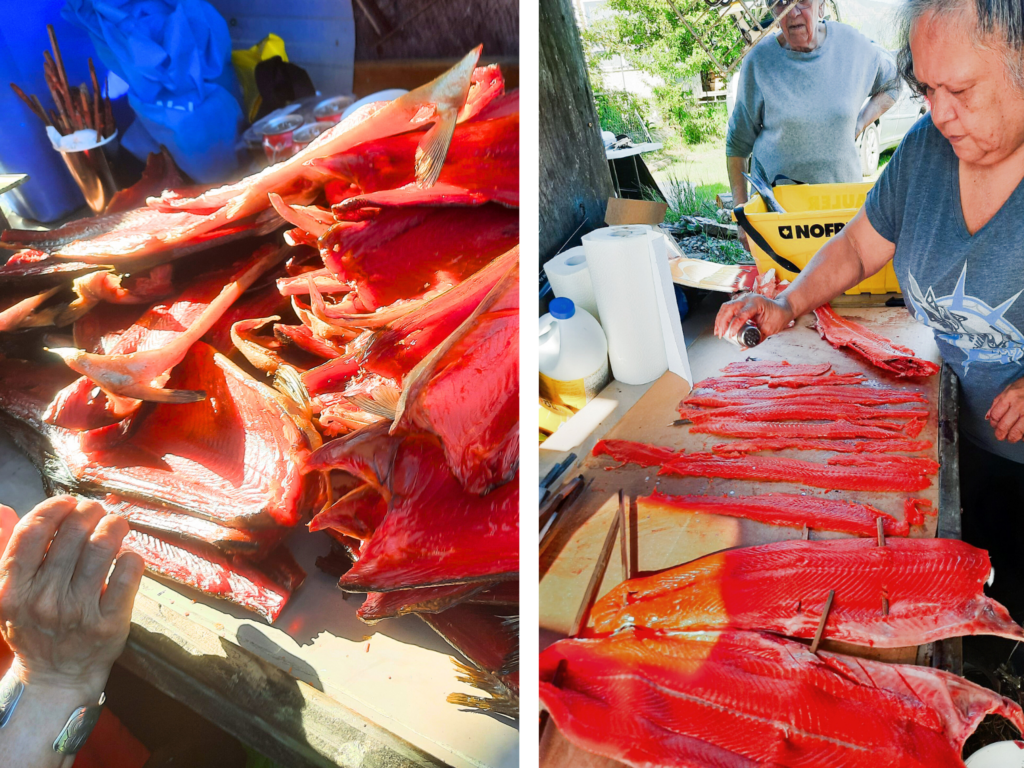
The project was led by ANSWER2 Collective (All Nations Strong Warriors for the Environment and Resurgence). ANSWER2 welcomes male-, female-identifying and Two-Spirit Indigenous people who endeavour to honour and inspire Indigenous communities and share Indigenous worldviews.
“The youth learned how to walk respectfully on Mother Earth,” says project lead, Jessica Sault. “They placed offerings by rivers and thanked the medicine waters and the sockeye for giving up its life. They were taught how to catch, clean, cut and smoke the sockeye. They learned to make cedar sticks and the magic of making the fire burn without flames, checking to make sure it lasted through the night.”
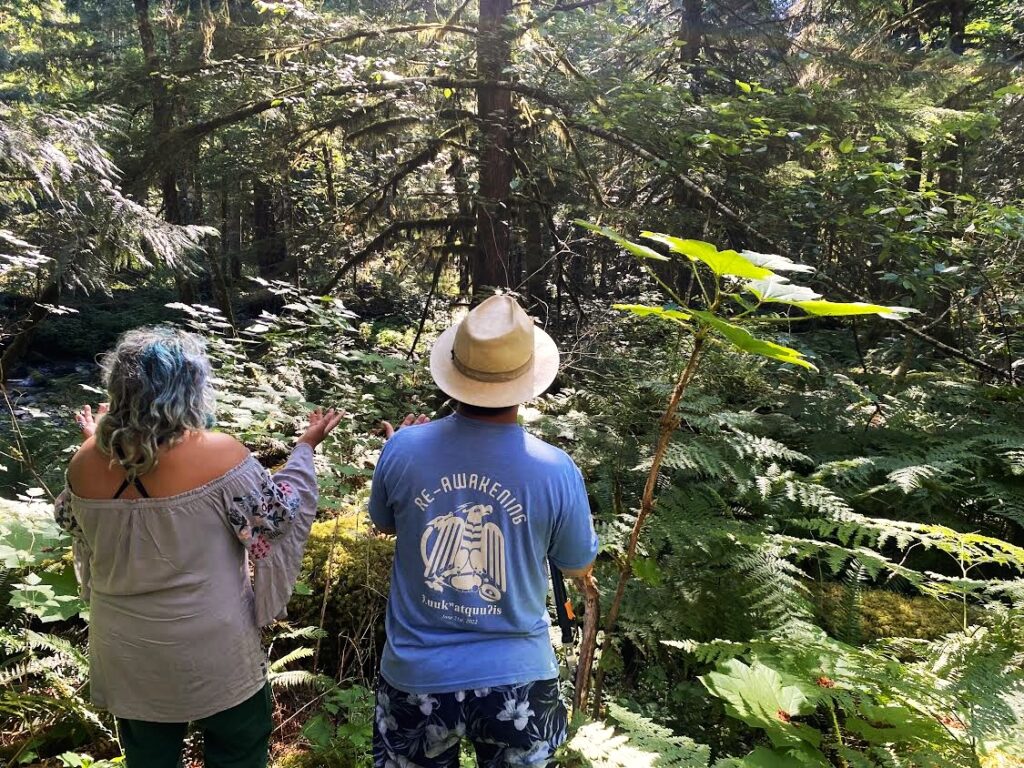
The HSP project created learning experiences steeped in traditional ways of knowing and being. Through songs, stories, prayers and stewardship practices, participants learned roles and responsibilities important to their community.
Food as a form of heritage
The projects and initiatives above illustrate how food connects us to our heritage. The act of sharing food and its traditions helps bring communities together. This year, B.C. Heritage Week takes place from February 16 to 22, 2026. It aligns with both B.C.’s Family Day and Canada’s National Heritage Day on Monday, February 16, making it an ideal opportunity for families to engage with First Nations heritage in B.C. For more information, visit heritagebc.ca.
Apply now to FPCC’s Heritage Program
Our Heritage programs are open for applications! FPCC works to support communities in stewarding their heritage through grants, programs and opportunities to bring people together to share knowledge.
Visit our Heritage Program page to view current funding opportunities, eligibility and funding guidelines.
We are here to provide support
If you have questions or need any assistance completing your application or using the grant portal, please contact the program staff listed at the bottom of each of our program page.
Heritage Resources and Stories
Learn more about our Heritage Programs here.
To view more Heritage Program stories click here.
View our Heritage Toolkit here.
View Indigenous cultural heritage places on the First Peoples’ Map.
Share your story!
Do you have a story about the work your community is doing to revitalize First Nations languages, heritage and arts in B.C.? We want to hear from you! Please send your story to info@fpcc.ca and check back as we post more stories about the good work being done across the province.
Connect with us
To receive FPCC news and funding announcements, please sign up for our email list here.
To view all current FPCC funding opportunities please visit our Grants page.
Follow FPCC on social media for updates: Facebook | Twitter (X)| LinkedIn | Bluesky | YouTube