

B.C. First Nations youth learn protocols for harvesting and safeguarding food, medicines and traditional knowledge with support from FPCC’s Heritage Stewardship Program
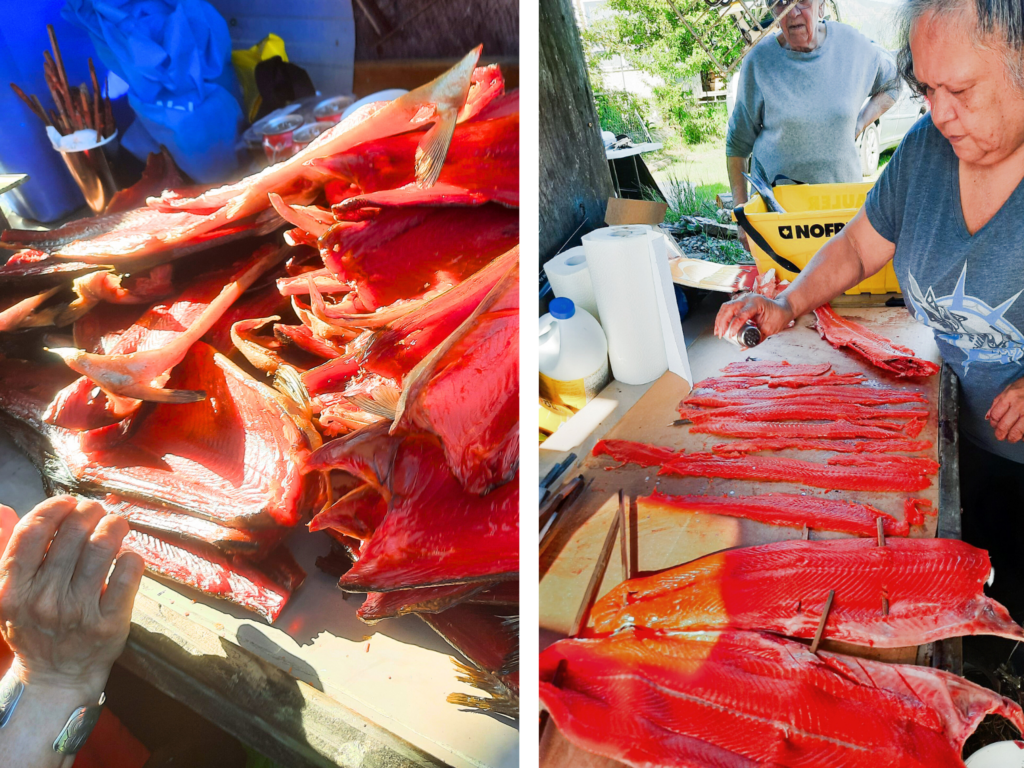
A recent project saw Tseshaht and Cowichan First Nations youth work with community experts to learn traditional harvesting practices, land management and culturally appropriate ways to document knowledge. The Tseshaht youth attended the community “fish days,” learning important teachings and protocols that emphasized care for the land, waters and community. All youth, with Elder Wanda Robinson, learned to process the fish on Cowichan territory. Through songs, stories, prayers and stewardship practices, students learned roles, relationships and responsibilities important to their community. The project was supported by the Heritage Stewardship Program.
The project, called “Harvesting Our Food, Medicine and Teachings,” was led by ANSWER2 Collective (All Nations Strong Warriors for the Environment and Resurgence). ANSWER2 welcomes male/female identifying and two spirit Indigenous people who endeavor to honour and inspire Indigenous communities and share Indigenous worldviews. The mandate of ANSWER2 is to walk the path of resurgence and environmental protection through learning and performing songs and dances. ANSWER2 is committed to building respectful relationships by following protocols of the Nation in whose territory they visit.
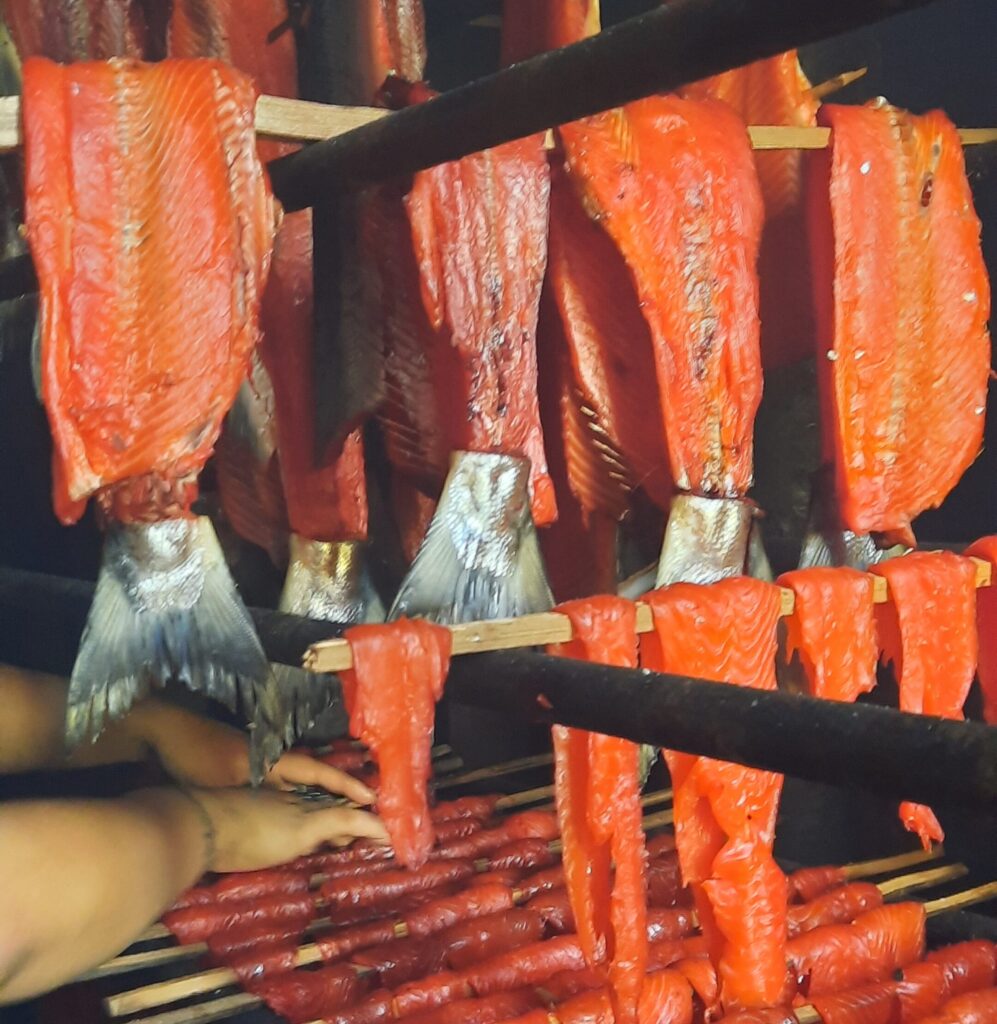
“The youth learned how to walk respectfully on Mother Earth,” says project lead, Jessica Sault. “They placed offerings by rivers and thanked the medicine waters and the sockeye for giving up its life. They were taught how to catch, clean, cut and smoke the sockeye. They learned to make cedar sticks and the magic of making the fire burn without flames, checking to make sure it lasted through the night.”
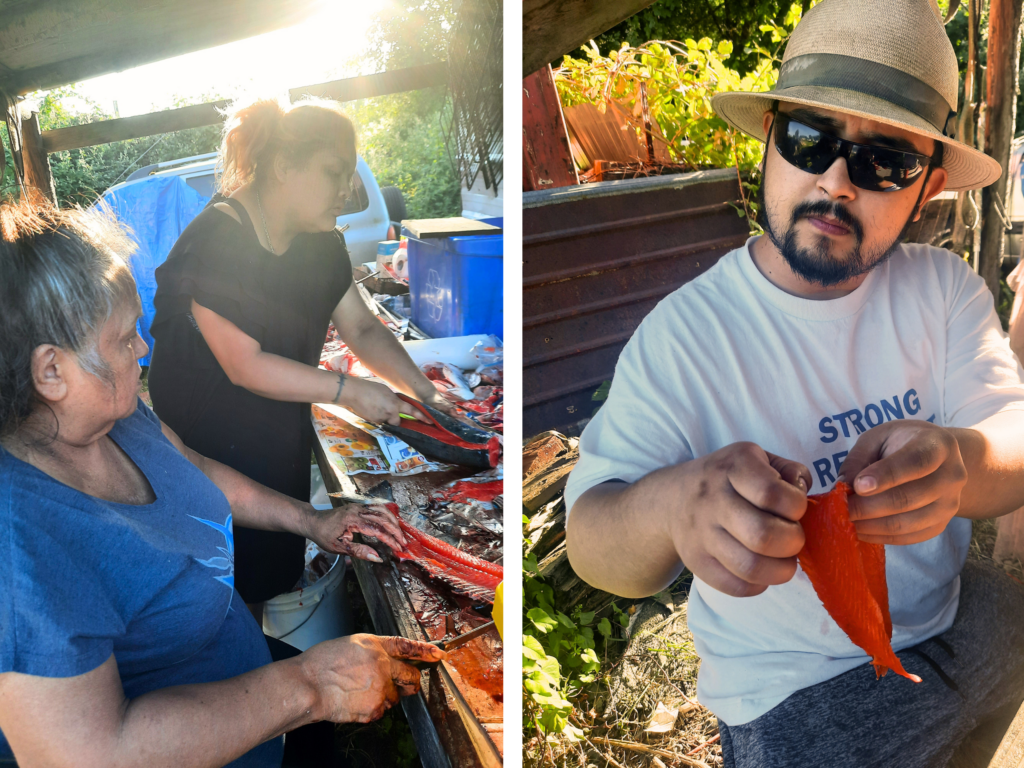
The entire process was incredibly spiritual, and while it took a long time, Jessica says, it was very much worth it.
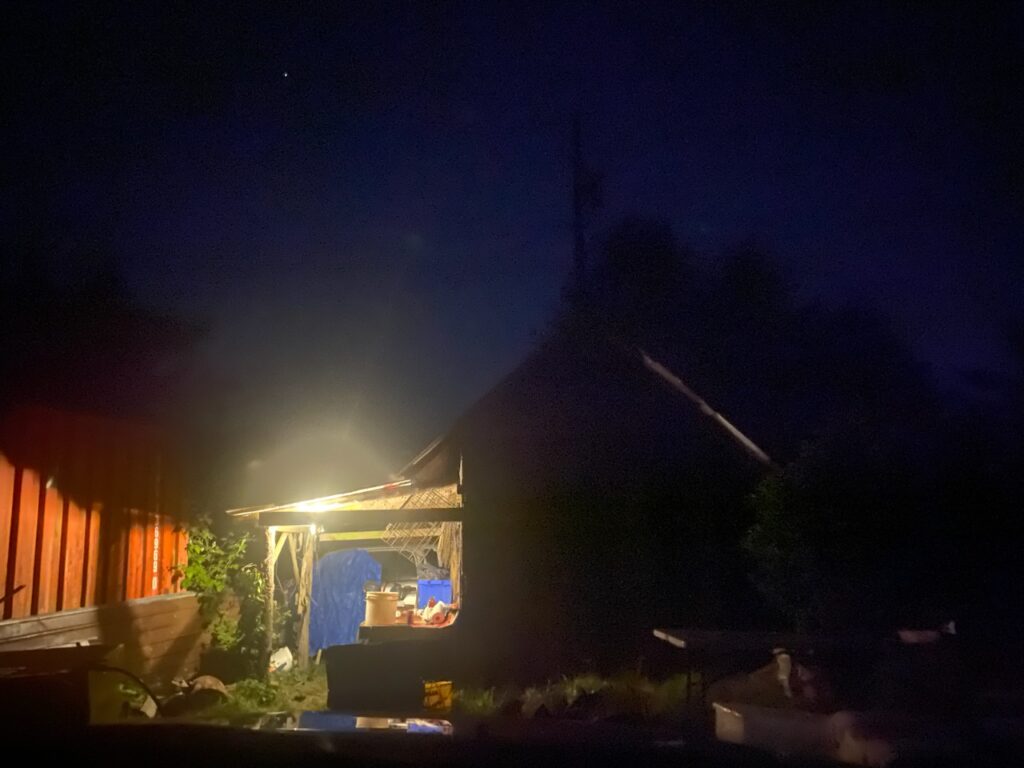
“It is a 24-hour job to keep the fire smoking just right, or it could ruin your whole batch of smoked fish,” she says. “We learned the old traditional way. More people are opting for the wire racks now as it is faster and easier, but our mentor, Wanda, would not even think of that. She learned the traditional way and so did we. Even the sticks had to be hand-done.”
Harvesting with respect and gratitude
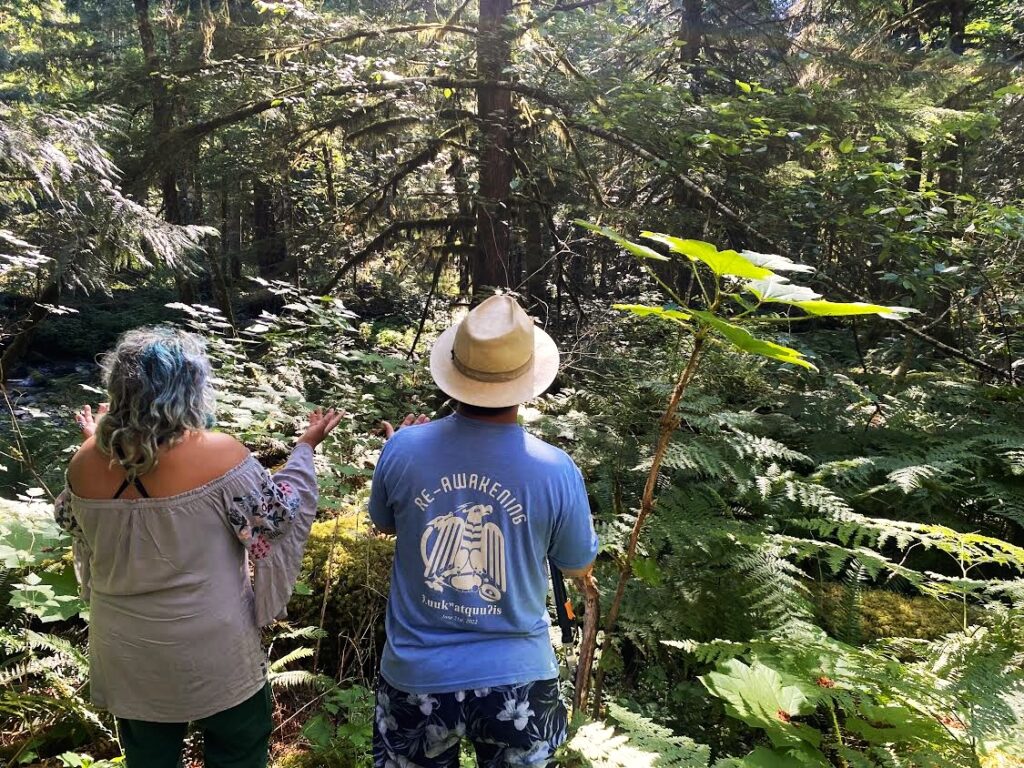
Deep in the woods, Elders and youth also learned to identify and harvest devil’s club. They processed it into tea and medicine and carved wood beads from the stalks.
“Respect, gratitude, humility and kindness are cornerstones of productivity and harmony with each other and spread to the land and world around them,” Jessica says. “The youth were taught protocols surrounding land acknowledgement and the difference between a land welcome and land acknowledgement. They placed offerings and chanted before going deep into the woods, thanking the Creator and Little People for looking after the woods and thanking the devil’s club plant for the medicine. My mom talked about the Little People when we were young.”
The youth were also taught how to safeguard the medicine for future generations by re-planting the top leaves of the devil’s club. They also put soil back in areas where it had eroded along the riverbanks to help ensure the plants’ survival.
Connecting the past, present and future
In addition to learning traditional harvesting methods and providing offerings and prayers to the forest, land, fish and medicines, the youth learned culturally appropriate ways to conduct oral history interviews with Elders. Through this meaningful process, youth took pride in their roles as learners and caretakers for their Elders. This included practising new skills recording and safeguarding cultural knowledge.
“The youth learned how to write relevant questions for Elder profiles through an Indigenous lens – family lineage, weaver/carver/harvester bloodlines – and how to care for the Elders. Family lineage is important in the Indigenous mindset. They learned to include the Elders’ ‘roots’. Roots to us means who your parents, grandparents, great-grandparents are. Roots also mean where you were born and what Nation you are from.”
The project incorporated two key priority areas of Heritage Stewardship Program funding. The first being Sense of Place, with youth learning traditional and contemporary ways to manage culture and heritage connected to their land. The second area related to Oral History and Protocols, with youth engaging with Elders in sharing and documenting their stories. Throughout each and every activity, the project created learning experiences steeped in traditional ways of knowing and being.
Apply now for FPCC’s Heritage Stewardship Program
The Heritage Stewardship Program provides funding to First Nations organizations in B.C. to address climate change, safeguard cultural sites, digitize cultural resources and record oral histories. It provides funding for training and support for B.C. First Nations people to act as stewards and experts of their cultures and heritage.
The application deadline is February 18, 2026, at 4:30 p.m. PT.
Please visit the Heritage Stewardship Program page for more information, links to the guidelines and application, and to view the recorded information session.
For any questions, please contact us at hsp@fpcc.ca.
The Heritage Stewardship Program is funded by the Ministry of Indigenous Relations and Reconciliation through the Province of British Columbia.
Share your story!
Do you have a story about the work your community is doing to revitalize First Nations languages, heritage and arts in B.C.? We want to hear from you! Please send your story to info@fpcc.ca and check back as we post more stories about the good work being done across the province.
We are here to provide support
If you have questions or need any assistance completing your application or using the grant portal, please contact the program staff listed at the bottom of each program page.
Connect with us
To receive FPCC news and funding announcements, please sign up for our email list here.
To view all current FPCC funding opportunities, please visit our Grants page.
Follow FPCC on social media for updates: Facebook | Twitter (X)| LinkedIn | Bluesky | YouTube
All photos courtesy of ANSWER2 Collective.