

Sarah Jeffrey is helping to revitalize the Sḵwx̱wú7mesh language at work and at home
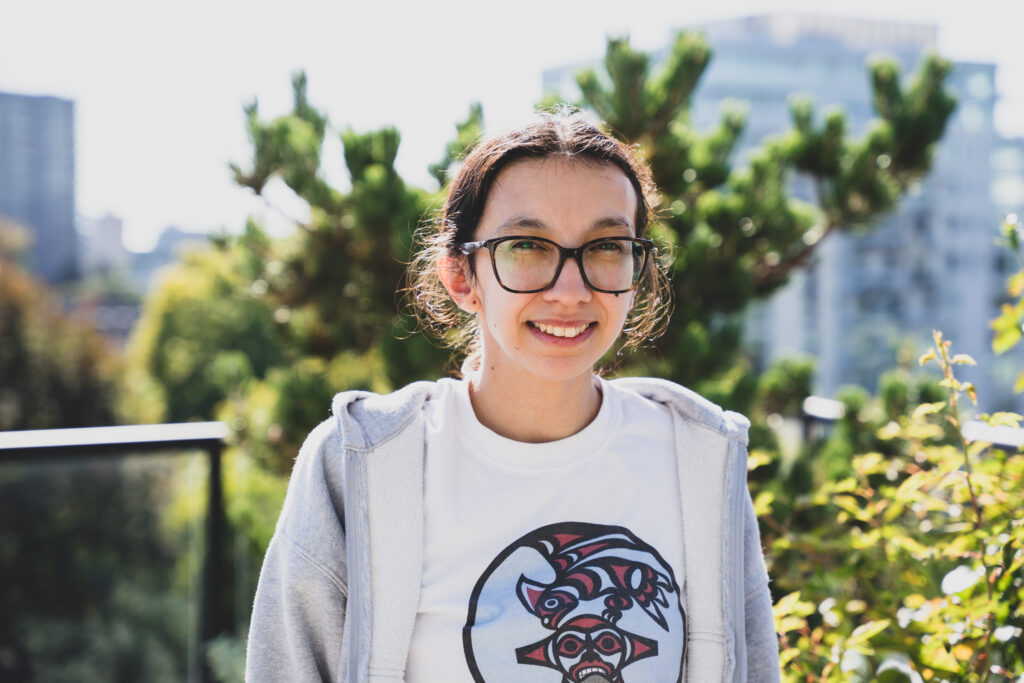
Sarah Jeffrey is Executive Director of Sníchim Foundation, a non-profit foundation based in Vancouver dedicated to revitalizing the language of the Sḵwx̱wú7mesh (Squamish) People since 2015. We caught up with her recently at one of FPCC’s digitization training events to talk to her about her work in growing language speakers and her mission to raise her two children as first language speakers of Sḵwx̱wú7mesh.
Language at Work
The Sníchim Foundation grows Sḵwx̱wú7mesh language speakers with funding support from sources like FPCC’s Language Vitality Program. The Sníchim Foundation’s certificate and diploma programs are intensive programs that offer cultural connections through interactions with other community members, speakers and Elders; trips out onto the land; traditional songs; legends; plant knowledge and much more. The foundation also offers a variety of other language immersion courses and opportunities, such as summer immersion programs and language and culture programs like their cooking immersion program.
Sarah Jeffrey first began learning Sḵwx̱wú7mesh in the Sḵwx̱wú7mesh Sníchim Simon Fraser University Certificate Program in 2017. A year later, she entered the two-year Sḵwx̱wú7mesh Sníchim Proficiency Diploma Program. In 2021, Sarah began working at Sníchim Foundation as the Communications Director, later moving to the role of Co-Executive Director, which she now shares with her colleague Salia Joseph (St’ax̱í7alut).

“Our teachers, they do such incredible work. I can’t take credit for anything that they’re doing, but the work that I do supports their work,” Sarah says. “When our organization began nine years ago, we had fewer than eight first language speakers alive and almost no second language speakers. Now we only have one first language speaker alive, but they are a silent speaker, so they actually don’t feel comfortable speaking in the language. However, in nine years, we’ve had over 70 students go through our immersion programming who have acquired the language. That means we’ve helped grow – well, our teachers have helped to create – all of those speakers in our community, from just seven speakers to 70, which is pretty incredible.”

The Littlest Language Speakers
Sarah isn’t just supporting language growth while at work, she is also nurturing it at home with her kids and husband, who has also taken the Sḵwx̱wú7mesh Proficiency Diploma Program.
“My husband and I are both very proficient speakers,” Sarah says. “When we decided to start a family, we named our kids in the Sḵwx̱wú7mesh language and knew that we wanted to raise them as much in the language as we could. So, at home, we primarily speak Sḵwx̱wú7mesh. Their first words were Sḵwx̱wú7mesh. As a baby, my son would come with me to work, and there would be language programming going on, so he’d be taking part in the certificate programming, unofficially, as an infant. He was acquiring the language alongside all these adult learners that were learning it, too.”
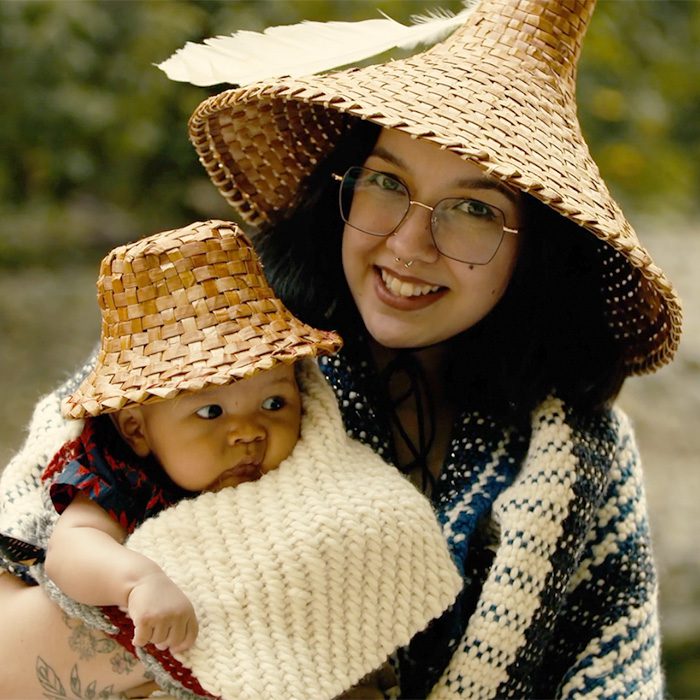
These days, Sarah’s daughter is following in her older brother’s footsteps. Having access to the language in different spaces, at home and at work, adds a communal element to the children’s language learning that feels very natural:
“Bringing my kids into my workspace is really beautiful because it turns it into such a community process. Like, if she’s fussy but we’re in the middle of a lesson, there’s another community member who’s also a classmate – maybe even my auntie or my cousin – and they’re picking up my daughter and helping. My daughter is fully engaged in all the language that’s going on, and her brother still actively prefers to come to work with me rather than go to daycare. It’s a lot more fun for him,” Sarah laughs.
Documenting the Language for Future Generations
While lots of language learning happens in person and at home through immersion, it’s important to note that there are also resources and teachings in recordings of past speakers that can be used as tools for current and future language speakers. At the digitization training workshop offered by FPCC this past September as part of the Language Vitality Program, Sarah emphasized the urgency around documenting recordings of her language before it’s too late.
“The digitization course opportunity came up, and I had heard that cassette tapes have a certain lifespan – you just can’t digitize them anymore past a certain point,” she says. “I’m hoping with this training that I can have the tools and the knowledge of how to digitize cassette tapes that contain really valuable recordings of our language. The state that my language is in is very endangered.”
At the workshop, digitization kits were distributed to those in attendance. These equipment kits are mobile workstations for converting the contents of audio cassette tapes from their analogue state to a digital format, which can be saved as a .wav or .mp3 file (digital audio file). These kits are carefully curated and assembled by FPCC and distributed to recipients of the digitization funding option in the Language Vitality Program. The recipients are trained on how to use the kits, as well as how to inventory, archive and mobilize their analogue source materials and digitized files. Sarah’s hope is that, in digitizing old audio recordings, even more learning tools for the next generation of Sḵwx̱wú7mesh speakers will be made available.
“I know that there are so many resources for us to help digitize. My hope is that in having the digikit and having the tools, I’ll be able to build a better relationship and archive our language so that it’ll strengthen what we can give to future students. It’ll give our future generations more to hold on to and deepen our own understanding of our language, too, because when you can hear the melody of the language of how our ancestors and Elders used to say things, it’s really different.”
At the end of day one of the digitization training workshop, Sarah already had some ideas on how to archive the Sníchim Foundation’s own language recordings:
“The training is giving me a lot of tools about how to better archive our own modern audio. Just seeing the format of how things are being archived, I’m realizing we’re not doing that with the current audio files that we have right now. I’m learning some best practices for storing things like our oral proficiency tests, which we always record.”
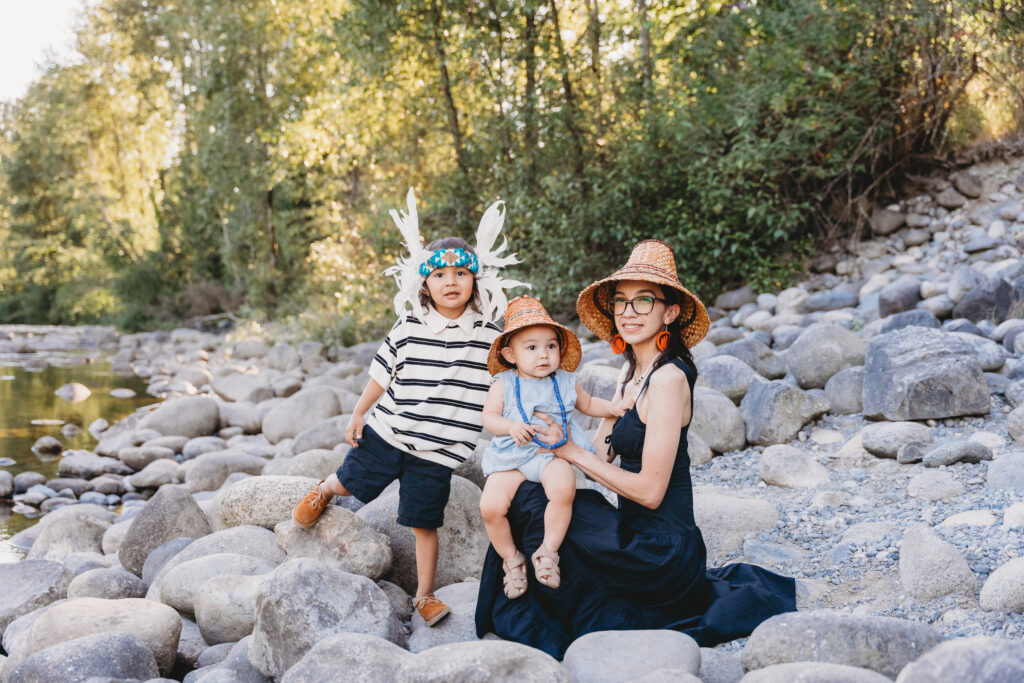
Fluent language speakers are developed through the use of language in all spaces: work, home and in the classroom, both in person and with support from technology. FPCC continues to support communities with program planning and technology developments to support language fluency.
Apply Now for FPCC Language Funding
Is your community working on language programs such as adult immersion, language nests, digitization and more? Language funding is now available for 2026–27 up to 2028–29 to support community-based projects that revitalize First Nations languages in B.C.
The Language Vitality Program supports projects from eligible organizations that create fluent speakers, document the languages and/or develop strategic language revitalization plans. Applicants may apply for one, two or up to three years of funding in a single application, based on the funding category. Multi-year funding supports project continuity and future planning for recipients.
The application deadline is December 10, 2025.
Please visit the Language Vitality Program page for more information, links to the guidelines and application, and register for the information session.
If you are unsure if your community or language organization is already funded by this program or you have questions about accessing Language funding, please contact us at languagegrant@fpcc.ca.
Share Your Story!
Do you have a story about the work your community is doing to revitalize First Nations languages, heritage and arts in B.C.? We want to hear from you! Please send your story to info@fpcc.ca, and check back as we post more stories about the good work being done across the province.
We Are Here to Provide Support
If you have questions or need any assistance completing your application or using the grant portal, please contact the program staff listed at the bottom of each program page.
Connect with Us
To receive FPCC news and funding announcements, please sign up for our email list here.
To view all current FPCC funding opportunities, please visit our Grants page.
Follow FPCC on social media for updates: Facebook | Twitter (X)| LinkedIn | Bluesky | YouTube